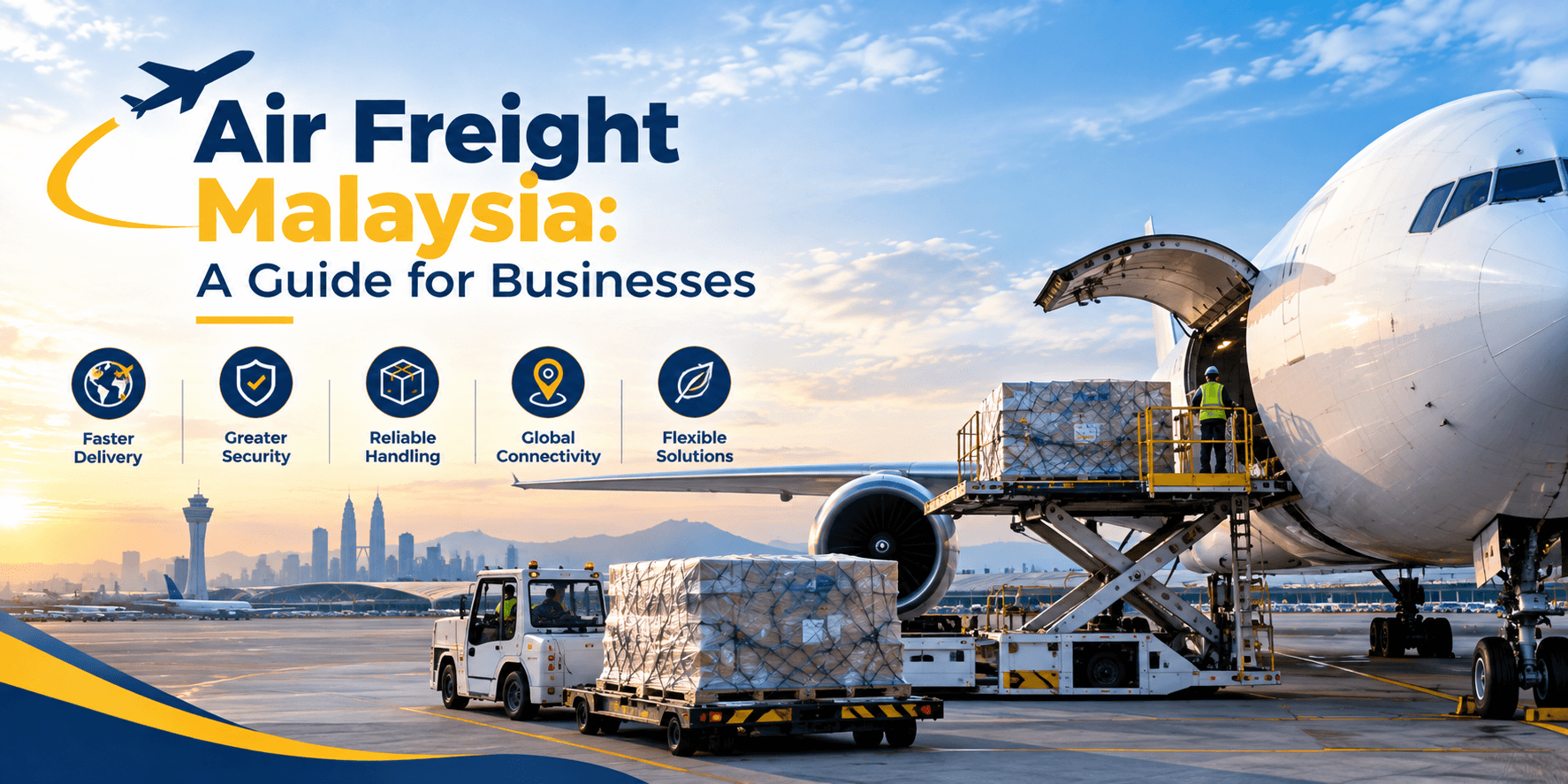
Businesses often use air freight when shipment speed, delivery schedules and cargo requirements make air transportation suitable. Compared with slower transportation methods, air freight can provide businesses with a faster way to move commercial goods between countries and locations.
For businesses looking for air freight in Malaysia, understanding how air cargo works, what affects pricing, which goods may be suitable and what documents are required can make shipment planning easier.
What Is Air Freight?
Air freight is the transportation of commercial goods by aircraft.
Businesses may consider air freight when they need to move goods internationally or between distant locations within a shorter transportation timeframe.
Air freight can be used for:
- Commercial products
- Business inventory
- Manufacturing materials
- Spare parts
- Time-sensitive goods
- High-value commercial cargo
- Import and export shipments
The appropriate transportation method depends on factors such as cargo type, weight, dimensions, destination, urgency and overall shipping requirements.
How Does Air Freight Work?
A typical air freight shipment involves several stages.
Cargo Preparation
The first step is preparing the cargo for transportation.
Businesses should confirm:
- Cargo type
- Quantity
- Weight
- Dimensions
- Packaging
- Pickup location
- Delivery destination
Accurate shipment information helps the logistics provider assess the appropriate transportation arrangement.
Air Freight Booking
Once the cargo requirements are confirmed, the shipment can be arranged according to the required origin, destination and preferred shipping schedule.
Businesses should provide accurate information when requesting an air freight quotation.
Cargo Collection and Handling
Depending on the arrangement, the cargo may be collected from the supplier, warehouse or other agreed location before being prepared for air transportation.
Proper packaging and handling are important because cargo passes through multiple stages before reaching its destination.
Air Transportation
The cargo is transported by aircraft from the origin toward the destination.
The overall shipment schedule depends on factors such as the origin, destination, available services, handling requirements and applicable procedures.
Arrival and Delivery
After the cargo arrives at the destination, the relevant import, customs and handling procedures are completed before the shipment continues to its final delivery location.
The exact process depends on the countries involved, cargo type and applicable requirements.
What Types of Cargo Are Suitable for Air Freight?
Air freight can be suitable for various types of commercial cargo, depending on transportation and regulatory requirements.
Examples include:
- Time-sensitive commercial goods
- Business inventory
- Spare parts
- Electronic products
- Manufacturing components
- High-value goods
- Samples
- Urgent replacement items
- Import and export cargo
Businesses should provide complete cargo information before booking, particularly when goods have special handling, documentation or regulatory requirements.
When Should Businesses Choose Air Freight?
Air freight may be considered when transportation speed is an important factor.
Businesses may consider air freight when:
- The shipment is time-sensitive
- Goods need to reach the destination quickly
- The cargo volume is relatively small
- Inventory needs to be replenished quickly
- Delays could affect business operations
- The shipment has a higher value relative to its size or weight
Air freight is not necessarily the right option for every shipment. Businesses should compare urgency, cargo characteristics, transportation costs and delivery requirements before selecting a shipping method.
What Affects Air Freight Costs in Malaysia?
Air freight pricing does not have one fixed rate. The overall cost depends on several factors.
Cargo Weight
The weight of the shipment is an important factor when assessing air freight requirements.
Businesses should provide accurate cargo weight information when requesting a quotation.
Cargo Dimensions
The size of the shipment can also affect the transportation arrangement.
Providing accurate length, width and height measurements helps the logistics provider assess the shipment correctly.
Origin and Destination
The locations involved in the shipment can affect transportation costs and the overall logistics process.
Shipment Urgency
Businesses may have different delivery requirements depending on how quickly the cargo needs to arrive.
The required shipping arrangement and available service options can influence the overall cost.
Cargo Type
Different types of goods can have different handling, packaging or documentation requirements.
Businesses should provide accurate information about the cargo before requesting a quotation.
Handling and Documentation
Additional handling, customs, documentation or other logistics requirements may affect the overall shipment cost.
For international air freight, businesses should consider the full logistics process rather than looking only at the transportation charge.
What Documents Are Needed for Air Freight?
The documents required for air freight depend on the shipment, countries involved, cargo type and applicable regulations.
Common documents may include:
- Commercial invoice
- Packing list
- Air waybill
- Customs documentation
- Import or export permits where applicable
- Certificate of Origin where required
- Other documents related to specific cargo or regulatory requirements
Businesses should confirm the documentation requirements before shipping, especially when transporting controlled, regulated or specialised goods.
Air Freight vs Sea Freight
Air freight and sea freight serve different transportation requirements.
| Factor | Air Freight | Sea Freight |
|---|---|---|
| Transportation method | Aircraft | Ocean vessel |
| Speed | Generally faster | Generally slower |
| Cargo volume | Often suited to smaller or urgent shipments | Often suitable for larger-volume shipments |
| Planning | Can be suitable for time-sensitive shipments | Generally requires advance planning |
| Cost considerations | Speed can result in higher transportation costs | Often considered for larger-volume shipments |
| Best suited to | Time-sensitive commercial cargo | Planned commercial shipments |
Neither option is suitable for every shipment.
Businesses should consider cargo volume, urgency, destination, budget, handling requirements and delivery schedule when deciding between air and sea freight.
How to Choose an Air Freight Service in Malaysia
Businesses should consider several factors before selecting an air freight provider.
Check the Service Requirements
Confirm whether the provider can support the required origin, destination and shipment type.
Provide Accurate Cargo Information
Provide:
- Cargo type
- Quantity
- Weight
- Dimensions
- Pickup location
- Delivery location
- Preferred shipping date
- Special handling requirements
Accurate information helps the logistics provider understand the shipment before preparing a quotation.
Check Documentation Requirements
Make sure the required commercial, customs and shipping documents are prepared before the shipment is arranged.
Consider the Complete Logistics Process
Air freight may be only one part of the overall supply chain.
For example:
Supplier → Pickup → Air Freight → Destination Handling → Delivery
If warehousing, road transportation or other logistics services are required, businesses should consider these requirements as part of the overall shipment plan.
Air Freight and Other Logistics Services
Air freight can form part of a wider logistics process.
For example, a business may require:
Supplier → Trucking → Warehouse → Air Freight → Destination → Delivery
Coordinating transportation, warehousing and freight services can help businesses manage shipments that involve multiple stages.
J&G Global Logistics also lists domestic transportation, cross-border transportation, sea freight and warehousing alongside its air freight service, allowing businesses to discuss different logistics requirements as part of their overall shipment planning.
Air Freight for Import and Export Shipments
Businesses involved in international trade may use air freight for both import and export shipments.
Before arranging an international shipment, businesses should confirm:
- Origin and destination
- Cargo details
- Commercial invoice
- Packing list
- Applicable customs documents
- Import or export permits where required
- Delivery requirements
- Any special cargo requirements
Customs and documentation requirements can vary depending on the countries and goods involved.
Businesses should therefore confirm the applicable requirements before shipping.
J&G Global Logistics Air Freight Services
J&G Global Logistics provides air freight services as part of its listed logistics solutions.
For businesses planning commercial air shipments, the appropriate transportation arrangement depends on factors such as cargo type, weight, dimensions, origin, destination and delivery requirements.
J&G Global Logistics also lists domestic transportation, cross-border transportation, sea freight and warehousing among its logistics services, allowing businesses to discuss related transportation and logistics requirements.
If you’re looking for air freight in Malaysia, J&G Global Logistics can discuss your shipment requirements and provide a quotation based on your cargo and transportation needs.
Request an Air Freight Quote in Malaysia
If you’re looking for air freight in Malaysia, J&G Global Logistics provides air freight solutions for businesses planning commercial cargo shipments. Request a quote to discuss your cargo, origin, destination and shipping requirements.
Frequently Asked Questions
Air freight is the transportation of commercial goods by aircraft from an origin location to a destination.
Businesses may consider air freight when shipment speed is important, cargo is time-sensitive or goods need to reach the destination within a shorter transportation timeframe.
Air freight can have higher transportation costs because of the speed and capacity characteristics of air transportation. The actual cost depends on cargo weight, dimensions, destination, urgency and other shipment requirements.
Documents can include commercial invoices, packing lists, air waybills, customs documents, permits and certificates of origin where applicable. Requirements vary by shipment and destination.
Factors can include cargo weight, dimensions, origin, destination, cargo type, urgency, handling requirements and documentation.
Yes. Air freight can be used for international import and export shipments, subject to the applicable customs, documentation and transportation requirements.
Provide the cargo type, quantity, weight, dimensions, origin, destination and preferred shipping schedule. These details help the logistics provider assess the shipment and prepare a quotation.