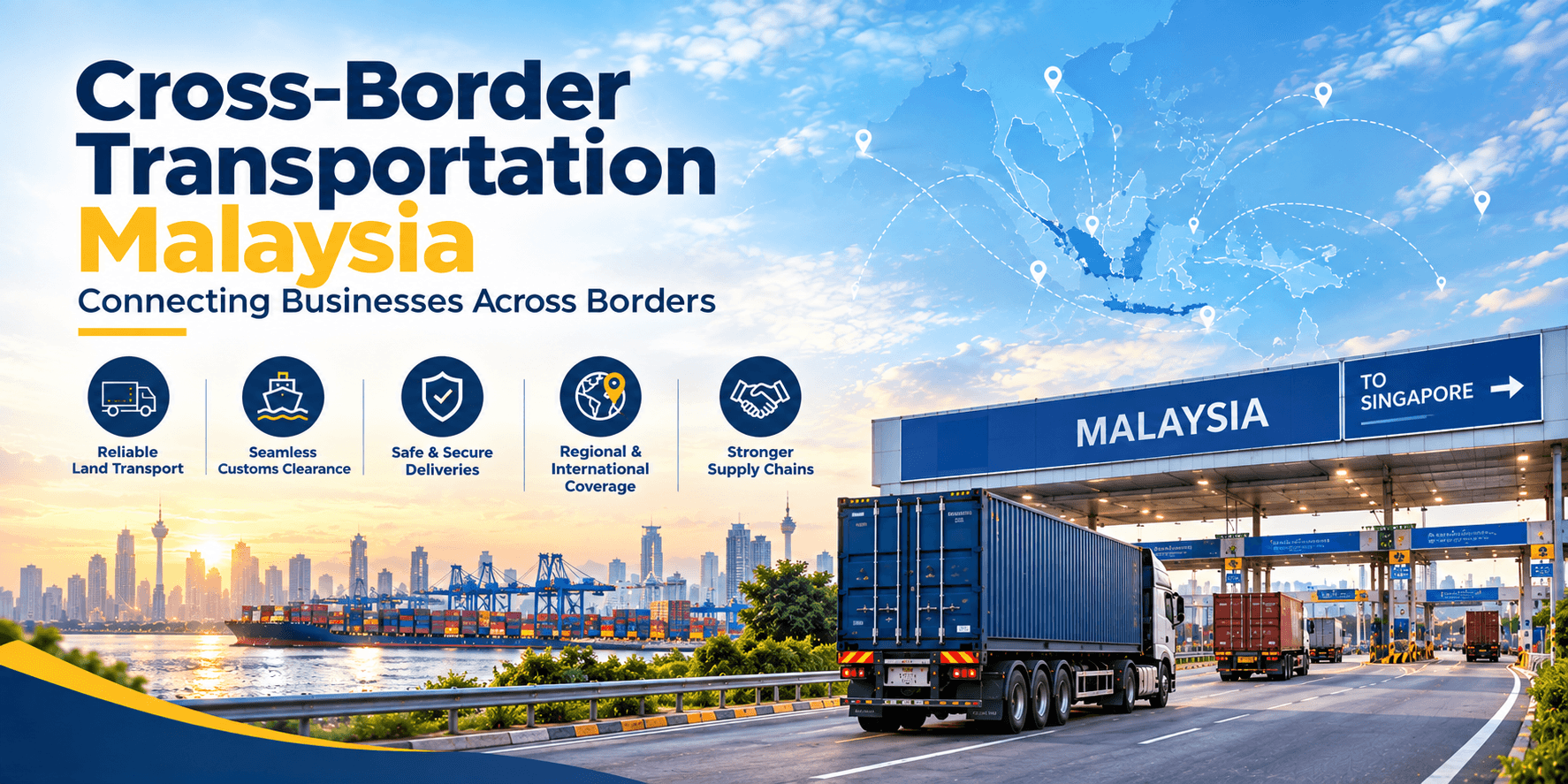
Businesses that move commercial goods between Malaysia and neighbouring markets need to plan more than just the road journey. Cross-border transportation involves cargo preparation, transportation planning, documentation, customs procedures, border coordination and final delivery.
For businesses looking for cross-border transportation in Malaysia, understanding how the process works and what factors affect the shipment can make freight planning more organised and help reduce avoidable delays.
What Is Cross-Border Transportation in Malaysia?
Cross-border transportation refers to the movement of commercial cargo between Malaysia and another country using road, sea or a combination of transportation methods.
For businesses, cross-border transportation may be used for:
- Moving inventory between business locations
- Supplying customers in another country
- Transporting manufacturing materials
- Warehouse-to-warehouse shipments
- Import and export cargo
- Regional distribution
- Connecting road transportation with sea freight
The transportation method depends on the shipment’s origin, destination, cargo characteristics, required delivery schedule and overall logistics requirements.
For businesses operating in southern Malaysia, cross-border transportation may include road freight between Johor Bahru and Singapore, while other international shipments may involve sea freight or combined transportation arrangements.
How Does Cross-Border Transportation Work?
Although the exact process varies by shipment, cross-border transportation generally involves several stages.
1. Shipment Planning
The first step is to establish the basic requirements of the shipment.
Businesses should identify:
- Pickup location
- Delivery location
- Cargo type
- Number of packages
- Weight and dimensions
- Preferred transportation date
- Required transportation method
- Any special handling requirements
Accurate information helps determine the appropriate transportation arrangement.
2. Cargo Preparation
Cargo should be properly packed, labelled and prepared before transportation.
Businesses should also ensure that shipment information matches the actual cargo. Differences between the declared information and the physical shipment can create problems during transportation or customs procedures.
3. Documentation Preparation
Cross-border shipments generally require supporting documents.
Depending on the shipment, documentation may include:
- Commercial invoice
- Packing list
- Transport documents
- Customs declarations or permits
- Certificates or supporting documents where applicable
The exact requirements depend on the countries involved, cargo type and applicable regulations.
4. Transportation and Border Procedures
Once the shipment is ready, transportation begins according to the agreed arrangement.
For road shipments, the cargo moves toward the relevant border crossing and is subject to the applicable border and customs procedures.
Businesses should make sure the required documentation and shipment information are prepared before the cargo moves.
5. Final Delivery
After the relevant border procedures are completed, the shipment continues to its destination.
The receiving party should be prepared to accept the cargo according to the agreed delivery arrangement.
What Transportation Methods Are Used for Cross-Border Freight?
Cross-border transportation does not always involve one transportation method. Businesses may use road, sea or combined logistics arrangements depending on their requirements.
Road Transportation
Road transportation is commonly used when the origin and destination can be connected efficiently by road.
For businesses in Johor Bahru, cross-border road transportation can connect Malaysia with Singapore.
Road freight may be suitable for:
- Commercial inventory
- Manufacturing materials
- Warehouse transfers
- Business supplies
- Retail stock
- Palletised cargo
- Regular commercial shipments
Sea Freight
Sea freight can be used when cargo needs to move between international ports.
Businesses may choose FCL or LCL arrangements depending on cargo volume and shipment requirements.
Sea freight can also form part of a wider cross-border logistics arrangement when cargo requires transportation before or after the ocean leg.
Combined Transportation
Some shipments require more than one transportation method.
For example, cargo may move by road from a supplier to a warehouse or port before continuing by sea to another market.
Using different transportation methods allows businesses to plan freight according to the origin, destination, cargo characteristics and overall logistics requirements.
What Documents Are Needed for Cross-Border Transportation?
Documentation requirements vary depending on the shipment, origin, destination, cargo type and applicable regulations.
Common documents may include:
- Commercial invoice
- Packing list
- Transport documents
- Customs documentation
- Import or export permits where applicable
- Certificates or supporting documents where required
For Malaysia-to-Singapore shipments, businesses should confirm the applicable import and export requirements before transportation begins.
The information provided on shipping documents should accurately describe the cargo and match the physical shipment.
Businesses handling controlled, regulated or special cargo should also confirm whether additional permits, certificates or documentation are required.
How Do Customs Procedures Affect Cross-Border Transportation?
Customs procedures are an important part of international freight movement.
Unlike domestic transportation, cross-border shipments may need to go through import and export procedures before the cargo can continue to its destination.
The requirements may depend on:
- Type of goods
- Country of origin
- Destination country
- Cargo value
- Applicable trade regulations
- Import or export requirements
- Whether the goods are controlled or regulated
Businesses should therefore prepare the necessary information and documentation before the shipment is scheduled.
For Malaysia-to-Singapore shipments, businesses should check the latest requirements with the relevant customs authorities rather than relying on general assumptions.
What Affects Cross-Border Transportation Costs?
There is no single price for cross-border transportation. The final cost depends on the specific shipment and transportation requirements.
Distance and Route
The pickup and delivery locations influence the transportation distance and route requirements.
A shipment between nearby border locations may have different transportation costs from a shipment requiring longer domestic positioning before crossing the border.
Cargo Weight and Dimensions
Cargo weight and dimensions can affect the transportation arrangement and available vehicle capacity.
Businesses should provide accurate cargo measurements when requesting a quotation.
FTL or LTL Requirements
Full Truckload (FTL) and Less Than Truckload (LTL) arrangements can have different pricing structures.
FTL may be suitable when a shipment requires most or all of a truck’s capacity, while LTL may be more appropriate for smaller shipments.
Cargo Type
The nature of the cargo can affect transportation planning.
Special cargo may require additional handling considerations, equipment or documentation depending on its characteristics.
Pickup and Delivery Requirements
Loading conditions, delivery access, scheduling requirements and specific pickup or delivery arrangements can influence the total transportation cost.
Customs and Documentation
Cross-border shipments may involve customs procedures, permits or additional documentation.
Any applicable customs-related costs should be confirmed based on the specific shipment and scope of service.
Additional Logistics Services
Some businesses require additional services such as warehousing, cargo handling or onward transportation.
When several services are involved, businesses should confirm which services are included in the quotation.
Cross-Border Transportation vs Domestic Transportation
The main difference between domestic and cross-border transportation is the additional international procedures involved in cross-border shipments.
| Factor | Domestic Transportation | Cross-Border Transportation |
|---|---|---|
| Destination | Within the same country | Between countries |
| Customs procedures | Generally not required for domestic movement | May be required |
| Documentation | Domestic transport documents | Additional import/export documentation may apply |
| Border procedures | Not applicable | Applicable where international borders are crossed |
| Planning | Primarily focused on transportation | Includes transportation and cross-border requirements |
| Delivery | Domestic destination | International destination |
Shipments therefore require businesses to consider transportation and regulatory requirements together.
Cross-Border Transportation for Import and Export
Cross-border transportation supports both import and export activities.
Export Shipments
Businesses exporting goods need to prepare the cargo and relevant export documentation before transportation.
Important considerations may include:
- Cargo readiness
- Commercial invoice
- Packing list
- Export requirements
- Transportation schedule
- Destination requirements
Import Shipments
For imported cargo, businesses should understand the destination country’s import requirements before the shipment begins.
Planning may include:
- Import documentation
- Customs procedures
- Delivery arrangements
- Cargo receiving requirements
- Applicable permits or certificates
Preparing these requirements early can help businesses coordinate transportation more effectively.
What Types of Cargo Can Be Transported Across Borders?
The suitable transportation arrangement depends on the cargo and the requirements of the shipment.
Commercial cross-border freight may include:
- Manufacturing materials
- Retail inventory
- Warehouse stock
- Business supplies
- Packaging materials
- Industrial equipment
- Machinery components
- Palletised cargo
- General commercial goods
Cargo characteristics should always be considered when selecting a transportation method.
For oversized, hazardous or otherwise regulated cargo, businesses should confirm the applicable transportation, handling and documentation requirements before booking.
Cross-Border Transportation Between Malaysia and Singapore
Malaysia-Singapore freight is an important cross-border transportation requirement for businesses operating in Johor and the surrounding region.
Businesses may use cross-border transportation between Johor Bahru and Singapore for:
- Inventory replenishment
- Manufacturing supply movement
- Warehouse transfers
- Customer deliveries
- Distribution activities
- Business-to-business freight
- Recurring commercial shipments
Because the shipment crosses an international border, businesses should prepare the required transportation and customs documentation before the cargo moves.
For businesses specifically searching for a JB to Singapore lorry service, a route-focused transportation arrangement may be more appropriate than a general cross-border solution.
Cross-Border Transportation and Other Logistics Services
Cross-border transportation is often only one part of a wider supply chain.
A shipment may also require:
- Domestic transportation
- Warehousing
- Sea freight
- Air freight
- Cargo handling
- Freight forwarding
- Distribution
For example, a business may move cargo from a supplier to a warehouse by road, store the goods temporarily, and then arrange cross-border transportation for the final delivery.
Integrating transportation with other logistics services can help businesses coordinate the movement of cargo across multiple stages of the supply chain.
How to Choose a Cross-Border Transportation Service in Malaysia
Businesses should consider several factors before selecting a transportation provider.
Check Cross-Border Service Coverage
Confirm that the provider supports the route and destination required for your shipment.
Provide Accurate Cargo Information
Give complete information about the cargo, including weight, dimensions, quantity and any special requirements.
Confirm Transportation Options
Ask whether the provider offers FTL, LTL or other transportation arrangements suitable for your shipment.
Understand Documentation Requirements
Confirm which documents are required and which party is responsible for preparing them.
Check What the Quotation Includes
A quotation should clearly explain the transportation scope and any additional charges that may apply.
Consider Your Wider Logistics Requirements
If your shipment also requires warehousing, sea freight, air freight or domestic transportation, consider whether these requirements can be coordinated as part of the same logistics plan.
Cross-Border Transportation Checklist
Before arranging cross-border transportation in Malaysia, businesses should prepare:
- Cargo type
- Number of packages or units
- Cargo weight
- Cargo dimensions
- Pickup location
- Delivery location
- Preferred transportation date
- FTL or LTL requirement
- Loading and unloading requirements
- Commercial invoice
- Packing list
- Required customs documents
- Import or export permits where applicable
- Special cargo information
- Warehousing requirements, if applicable
Providing this information early can make it easier to plan the transportation arrangement and request an accurate quotation.
J&G Global Logistics Cross-Border Transportation Services
J&G Global Logistics lists cross-border transportation among its logistics services and states that its cross-border solutions connect Malaysia with Singapore and Thailand through trucking and sea links. The company’s service page also references documentation, customs clearance, port handling and final delivery as part of its cross-border logistics offering.
J&G’s listed logistics services also include domestic transportation, sea freight, air freight and warehousing. This allows businesses to discuss cross-border transportation alongside other logistics requirements when a shipment involves multiple transportation or storage stages.
For businesses moving commercial cargo between Malaysia and neighbouring markets, the appropriate transportation arrangement depends on factors such as cargo type, origin, destination, shipment size and delivery requirements.
Request a Cross-Border Transportation Quote in Malaysia
If you’re looking for cross-border transportation in Malaysia, J&G Global Logistics provides cross-border logistics solutions for businesses moving commercial cargo between Malaysia and regional destinations. Request a quote to discuss your cargo, pickup and delivery requirements.
Frequently Asked Questions
Cross-border transportation in Malaysia refers to the movement of commercial goods between Malaysia and another country using road, sea or combined transportation methods.
Domestic transportation moves cargo within one country, while cross-border transportation involves movement between countries and may require customs procedures and additional documentation.
Yes. Businesses can arrange cross-border transportation between Malaysia and Singapore, subject to the applicable transportation, customs and documentation requirements.
Common documents may include commercial invoices, packing lists, transport documents and applicable customs permits or certificates. Requirements vary depending on the cargo and destination.
The cost depends on factors such as cargo weight and dimensions, route, pickup and delivery locations, FTL or LTL requirements, cargo characteristics, handling requirements and applicable cross-border procedures.
Yes. Cross-border logistics may involve sea freight as well as road transportation, depending on the shipment origin, destination and transportation requirements.
Businesses should provide the cargo type, quantity, weight, dimensions, pickup location, delivery location, preferred date, transportation requirements and any special handling or documentation requirements.