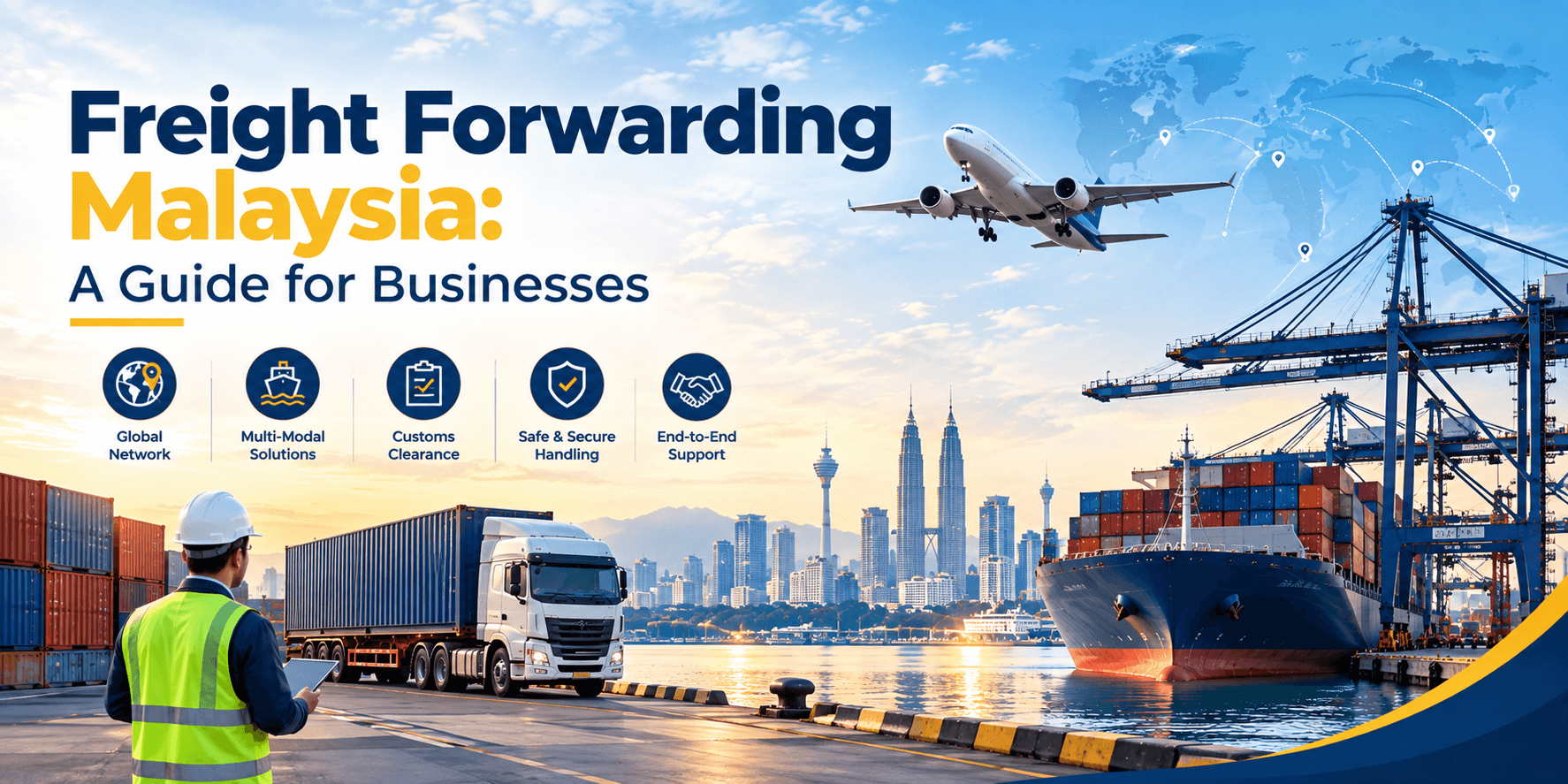
Businesses moving commercial goods between suppliers, warehouses, ports and customers often need to coordinate several stages of transportation. Freight forwarding can help organise these requirements and connect different parts of the logistics process.
For businesses looking for freight forwarding in Malaysia, understanding how freight forwarding works, what services may be involved and what information is required can make shipment planning easier.
What Is Freight Forwarding?
Freight forwarding is the process of coordinating the transportation of commercial cargo from an origin to a destination.
A freight forwarding arrangement can involve several logistics activities, depending on the shipment requirements.
These may include:
- Shipment planning
- Cargo collection
- Transportation arrangements
- Documentation
- Cargo handling
- Sea freight
- Air freight
- Road transportation
- Warehousing
- Delivery coordination
The exact services required depend on factors such as cargo type, origin, destination, shipment size, transportation mode and delivery requirements.
What Does a Freight Forwarder Do?
A freight forwarder can coordinate different parts of a shipment based on the requirements of the business.
Shipment Planning
The shipment is assessed based on information such as:
- Cargo type
- Quantity
- Weight
- Dimensions
- Origin
- Destination
- Preferred transportation method
- Delivery requirements
This information helps determine an appropriate logistics arrangement.
Transportation Arrangements
Depending on the shipment, transportation may involve road, sea or air freight.
For example, commercial cargo may require road transportation from a supplier to a warehouse or port before continuing by sea or air.
Documentation
Freight shipments can require commercial, transportation and customs-related documents.
The documentation required depends on the shipment, countries involved, cargo type and applicable regulations.
Cargo Coordination
A freight forwarding process may involve multiple stages of cargo movement and handling.
Coordinating these stages can help businesses keep track of how goods move from the origin to the final destination.
Delivery Planning
After the main transportation stage, cargo may require additional transportation before reaching the final delivery location.
The delivery arrangement depends on the destination and shipment requirements.
How Does Freight Forwarding Work in Malaysia?
A typical freight forwarding process can involve several stages.
1. Cargo Information
The business provides details about the shipment, including cargo type, quantity, weight, dimensions, origin and destination.
2. Shipment Planning
The logistics requirements are assessed and a suitable transportation arrangement is considered.
3. Cargo Collection
Depending on the arrangement, cargo may be collected from a supplier, warehouse or other agreed location.
4. Freight Transportation
The cargo is transported using the selected transportation method.
This may involve road transportation, sea freight or air freight.
5. Documentation and Customs
Relevant documentation and applicable customs procedures are completed according to the shipment requirements.
6. Destination Handling
After the cargo reaches its destination, the shipment may require handling, clearance or additional transportation.
7. Final Delivery
The cargo is transported to its final delivery location.
The exact process varies depending on the countries, cargo and logistics arrangement involved.
What Types of Freight Can Be Forwarded?
Freight forwarding can be used for many types of commercial cargo, subject to applicable transportation and regulatory requirements.
Examples include:
- Commercial products
- Business inventory
- Manufacturing materials
- Machinery and equipment
- Spare parts
- Electronic products
- Retail goods
- Import and export cargo
Businesses should provide complete information about their cargo before arranging transportation, particularly when goods have special handling or regulatory requirements.
What Transportation Methods Are Used in Freight Forwarding?
Freight forwarding can involve different transportation methods depending on the shipment.
Sea Freight
Sea freight can be considered for commercial shipments where cargo volume, planning requirements and transportation costs make ocean transportation suitable.
Businesses may use FCL or LCL arrangements depending on the shipment.
For more information, see our guide to Sea Freight Malaysia.
Air Freight
Air freight may be considered when shipment speed is an important factor.
It can be suitable for time-sensitive goods, urgent inventory replenishment and other commercial shipments where faster transportation is required.
Road Freight
Road transportation can connect suppliers, warehouses, ports, airports and final delivery locations.
It can also be used for domestic and cross-border cargo transportation depending on the shipment requirements.
What Documents Are Commonly Required?
The documentation required for freight forwarding depends on the shipment, countries involved, cargo type and applicable regulations.
Common documents may include:
- Commercial invoice
- Packing list
- Transport document
- Bill of lading for sea freight where applicable
- Air waybill for air freight where applicable
- Customs documentation
- Import or export permits where required
- Certificate of Origin where required
- Cargo-specific documentation
Businesses should confirm the applicable documentation requirements before shipping.
For Malaysia-Singapore shipments, businesses should also understand the relevant import and export documentation requirements.
What Affects Freight Forwarding Costs in Malaysia?
Freight forwarding does not have one fixed price.
The total cost can depend on several factors.
Cargo Type and Volume
The type, quantity and volume of cargo can affect the transportation and handling requirements.
Origin and Destination
The locations involved can influence transportation distance, handling requirements and overall logistics costs.
Transportation Mode
Road, sea and air freight have different cost structures.
The appropriate transportation method depends on the cargo, urgency, destination and other requirements.
Handling Requirements
Cargo that requires additional handling, packaging or specialised arrangements may involve additional costs.
Documentation and Customs
Documentation, customs procedures and applicable permits can form part of the overall logistics process.
Delivery Requirements
The final delivery location and transportation requirements can also affect the total cost.
Businesses should provide complete shipment information when requesting a freight forwarding quotation.
Freight Forwarding vs Shipping: What Is the Difference?
Shipping generally refers to the transportation of goods from one location to another.
Freight forwarding is broader and can involve coordinating multiple stages of the shipment.
For example:
Shipping:
Cargo → Transportation → Destination
Freight forwarding:
Cargo Collection → Documentation → Transportation → Handling → Customs → Delivery
In practice, the services involved depend on the logistics provider and the specific shipment.
Freight Forwarding for Import and Export
Freight forwarding can form part of both import and export logistics.
An international shipment may involve:
Supplier → Pickup → Freight Forwarding → Port/Airport → International Transportation → Destination → Delivery
Before arranging an international shipment, businesses should confirm:
- Origin
- Destination
- Cargo details
- Commercial invoice
- Packing list
- Applicable customs documentation
- Import or export permits where required
- Delivery requirements
- Any special cargo requirements
Requirements can vary depending on the countries involved and the goods being transported.
How Freight Forwarding Connects With Other Logistics Services
Freight forwarding can form part of a wider supply chain.
A business may require several logistics services for one shipment:
Supplier → Trucking → Warehouse → Freight Forwarding → Sea/Air Freight → Destination → Delivery
For example, road transportation may be required to move cargo from a supplier to a warehouse, while sea or air freight may be used for international transportation.
Warehousing can also be used to store goods before they are distributed or shipped.
Coordinating these services can help businesses plan shipments involving multiple transportation stages.
How to Choose a Freight Forwarding Service in Malaysia
Businesses should consider several factors before selecting a freight forwarding service.
Check the Transportation Requirements
Confirm whether the provider can support the required transportation method, origin and destination.
Provide Accurate Cargo Information
Prepare details such as:
- Cargo type
- Quantity
- Weight
- Dimensions
- Pickup location
- Delivery location
- Preferred shipping date
- Special handling requirements
Check Documentation Requirements
Confirm which commercial, customs and transportation documents are required for the shipment.
Consider the Complete Logistics Process
Consider whether the shipment also requires:
- Road transportation
- Warehousing
- Sea freight
- Air freight
- Container handling
- Final delivery
Looking at the complete process can make it easier to identify the logistics services required.
Freight Forwarding for Businesses in Johor
Johor is an important location for businesses involved in domestic and international cargo movement.
Businesses in Johor Bahru may require transportation between suppliers, warehouses, ports, airports and customers.
Depending on the shipment, freight requirements may involve domestic transportation, cross-border transportation, sea freight, air freight or warehousing.
Businesses should consider the origin, destination, cargo requirements and transportation method when planning freight movements from Johor.
J&G Global Logistics Freight Forwarding Services
J&G Global Logistics provides air freight and sea freight services as part of its listed logistics solutions.
The company also lists domestic transportation, cross-border transportation and warehousing among its services.
For businesses planning commercial shipments, the appropriate logistics arrangement depends on factors such as cargo type, weight, dimensions, origin, destination and delivery requirements.
Businesses can discuss their shipment requirements with J&G Global Logistics to determine the appropriate transportation and logistics arrangement.
Freight Forwarding Quote Checklist
Before requesting a freight forwarding quotation, businesses should prepare:
- Cargo type
- Number of packages
- Weight
- Dimensions
- Pickup location
- Delivery location
- Preferred shipping date
- Transportation method
- Special handling requirements
- Required documentation
- Any warehousing requirements
Providing accurate information can help the logistics provider assess the shipment and prepare a more appropriate quotation.
Request a Freight Forwarding Quote in Malaysia
If you’re looking for freight forwarding services in Malaysia, J&G Global Logistics can discuss your cargo, origin, destination and transportation requirements and provide a quotation based on your shipment needs. Request a quote to discuss your freight requirements.
Frequently Asked Questions
Freight forwarding is the coordination of commercial cargo transportation from an origin to a destination, which may involve transportation, documentation, handling and delivery arrangements.
A freight forwarder can coordinate different parts of a shipment, including transportation arrangements, documentation, cargo handling and delivery planning.
A typical process involves providing cargo information, planning the shipment, arranging transportation, completing relevant documentation and customs procedures, handling the cargo and arranging final delivery.
Shipping generally refers to transporting goods, while freight forwarding can involve coordinating multiple stages and services involved in moving cargo from origin to destination.
Costs depend on factors such as cargo type, volume, origin, destination, transportation mode, handling requirements, documentation and delivery requirements.
Yes. Freight forwarding can form part of both import and export logistics, subject to applicable customs, documentation and transportation requirements.
Businesses should normally provide cargo type, quantity, weight, dimensions, origin, destination, preferred shipping date and any special handling or documentation requirements.