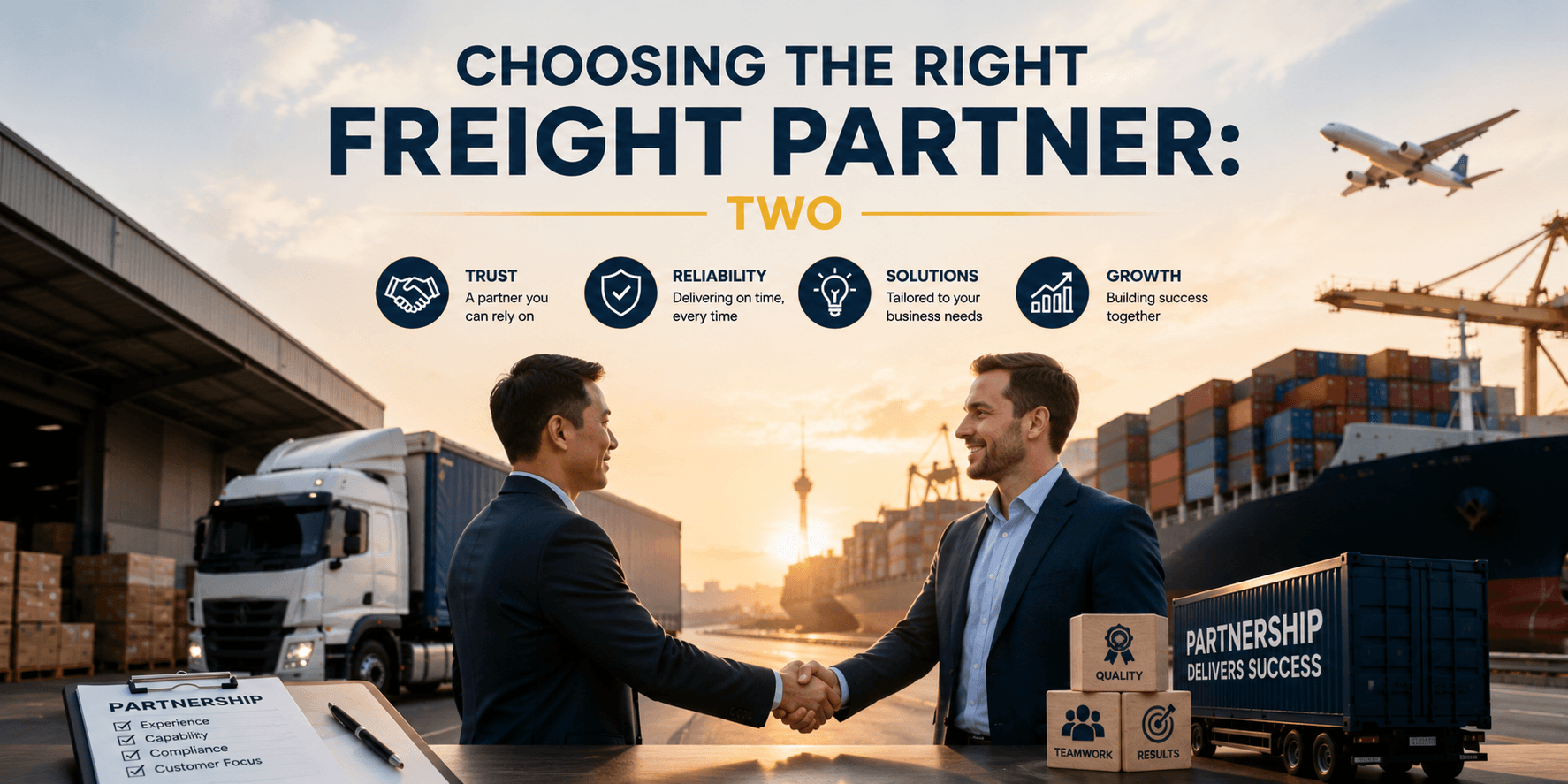
Selecting a logistics provider is only the first step. Before committing to a long-term freight agreement, businesses should carefully evaluate whether the provider can consistently support operational requirements, shipment volumes and future business growth.
Many organisations compare quotations but overlook important operational considerations that affect long-term logistics performance. A provider that appears competitive on price may not always deliver the flexibility, responsiveness or operational support required for commercial freight.
Whether your business requires domestic transportation across Malaysia, cross-border freight between Johor Bahru and Singapore, warehousing or international freight forwarding, conducting a structured logistics evaluation helps reduce operational risk while ensuring your supply chain remains reliable.
This guide explains how businesses should evaluate a logistics provider before entering into a freight agreement.
Why Evaluating a Logistics Provider Matters
Changing logistics providers after operations have begun can disrupt inventory movement, customer deliveries and warehouse planning.
A proper evaluation allows businesses to identify potential issues before they affect operations.
Benefits include:
- Better transportation reliability
- Lower operational risk
- More predictable freight planning
- Improved communication
- Better long-term supply chain support
Rather than making decisions based solely on pricing, businesses should assess whether the provider can consistently support commercial operations.
1. Understand Your Own Logistics Requirements First
Before evaluating any provider, define exactly what your business requires.
Questions include:
- What products are being transported?
- How frequently are shipments scheduled?
- Are deliveries domestic or cross-border?
- Is warehousing required?
- Are shipments palletised, oversized or temperature-sensitive?
Knowing these operational requirements makes it easier to determine whether a logistics provider is the right fit.
2. Assess Operational Capacity
A provider should have sufficient resources to support both current and future shipment volumes.
Areas to review include:
- Fleet size
- Vehicle types
- Warehouse capacity
- Driver availability
- Peak season capability
This is particularly important for manufacturers and distributors that rely on recurring freight schedules.
3. Review Service Coverage
Transportation coverage should align with your business footprint.
Consider whether the provider supports:
- Johor Bahru
- Kuala Lumpur
- Selangor
- Penang
- Melaka
- Negeri Sembilan
- Perak
- Singapore cross-border routes
Working with a provider that offers nationwide and regional coverage reduces the need for multiple logistics vendors.
4. Examine Their Planning Process
A capable logistics provider should explain how shipments are planned—not simply provide a quotation.
Ask how they handle:
- Vehicle allocation
- Delivery scheduling
- Peak demand periods
- Shipment consolidation
- Urgent freight requests
- Route planning
Structured planning usually results in fewer operational disruptions.
5. Evaluate Communication Standards
Communication becomes especially important when shipment schedules change.
Businesses should assess whether the provider offers:
- Dedicated account contacts
- Fast quotation turnaround
- Collection confirmations
- Delivery updates
- Responsive customer support
Clear communication improves coordination between warehouses, transport teams and receiving locations.
6. Verify Cross-Border Experience
For businesses transporting goods between Malaysia and Singapore, cross-border experience is essential.
An experienced logistics provider understands:
- Commercial shipment coordination
- Collection scheduling
- Delivery planning
- Border transit requirements
- Communication between both locations
This reduces unnecessary delays while supporting more predictable freight movement.
7. Review Warehousing Capabilities
Transportation and warehousing increasingly work together.
Consider whether the provider offers:
- Inventory storage
- Distribution support
- Cross-docking
- Shipment staging
- Warehouse transfers
Integrated logistics can simplify operations while improving inventory flow.
8. Ask About Performance Monitoring
Reliable logistics providers continuously review operational performance.
Useful indicators include:
- On-time delivery performance
- Collection punctuality
- Damage rates
- Delivery exceptions
- Customer response times
Regular performance reviews help businesses improve supply chain efficiency over time.
9. Consider Future Scalability
Your logistics provider should be able to support business growth.
Ask whether they can accommodate:
- Higher shipment volumes
- Additional delivery locations
- Warehouse expansion
- New distribution centres
- International freight
- Seasonal demand increases
Choosing a scalable provider avoids unnecessary changes later.
10. Compare Overall Business Value
Instead of comparing quotations alone, evaluate the complete logistics solution.
Consider:
- Industry experience
- Fleet capability
- Warehousing
- Communication
- Geographic coverage
- Operational planning
- Flexibility
- Long-term support
A provider that contributes to smoother operations often delivers greater value than one that simply offers the lowest freight rate.
Logistics Provider Evaluation Checklist
- Before signing a freight agreement, confirm that the provider can demonstrate:
- Commercial freight experience
- Suitable transportation fleet
- Domestic and cross-border capabilities
- Warehousing services (if required)
- Clear communication processes
- Transparent pricing
- Operational planning procedures
- Scalable logistics solutions
- Strong customer support
- Reliable long-term partnership approach
Why Malaysian Businesses Benefit from Structured Logistics Evaluation
Businesses across Malaysia increasingly depend on integrated logistics to support manufacturing, distribution, retail and warehouse operations.
Taking time to evaluate a logistics provider helps organisations:
- Improve supply chain resilience
- Reduce transportation risks
- Strengthen inventory planning
- Improve operational coordination
- Support long-term business growth
Rather than reacting to logistics problems after they occur, businesses can establish more reliable freight operations from the beginning.
How J&G Global Logistics Supports Commercial Freight Operations
J&G Global Logistics provides integrated logistics solutions for businesses throughout Malaysia, including domestic transportation, cross-border freight between Johor Bahru and Singapore, sea freight, air freight and warehousing services.
Every shipment is planned according to cargo characteristics, operational priorities and delivery schedules rather than applying a standard transport solution. This enables manufacturers, distributors, wholesalers, retailers and warehouse operators to maintain efficient freight movement while improving supply chain coordination.
Whether supporting recurring domestic deliveries or managing complex regional freight operations, J&G Global Logistics focuses on practical logistics planning, dependable transportation and responsive customer support that adapts to evolving business requirements.
If your business is reviewing logistics providers for an upcoming freight contract, contact J&G Global Logistics to discuss your transportation requirements and discover a logistics solution tailored to your commercial operations.
Frequently Asked Questions
Businesses should assess operational capacity, transportation coverage, communication standards, warehousing capabilities, scalability, freight planning processes and relevant commercial logistics experience before entering into a freight agreement.
A structured evaluation reduces operational risks, improves freight reliability and helps businesses choose a provider capable of supporting long-term supply chain performance rather than focusing only on transportation costs.
Important questions include fleet capacity, delivery coverage, communication processes, warehousing services, shipment planning procedures, cross-border experience, pricing transparency and the provider’s ability to support future business growth.
Integrated logistics combines transportation, warehousing, freight planning and supply chain coordination into a single solution, helping businesses improve efficiency, reduce delays and simplify logistics management.
Manufacturers, distributors, wholesalers, retailers, warehouse operators and businesses with recurring freight movements benefit by selecting logistics providers that match their operational and supply chain requirements.
J&G Global Logistics provides businesses across Malaysia with domestic transportation, cross-border logistics, sea freight, air freight and warehousing services. By aligning freight operations with each customer’s commercial requirements, the company helps businesses maintain efficient, reliable and scalable supply chain operations.