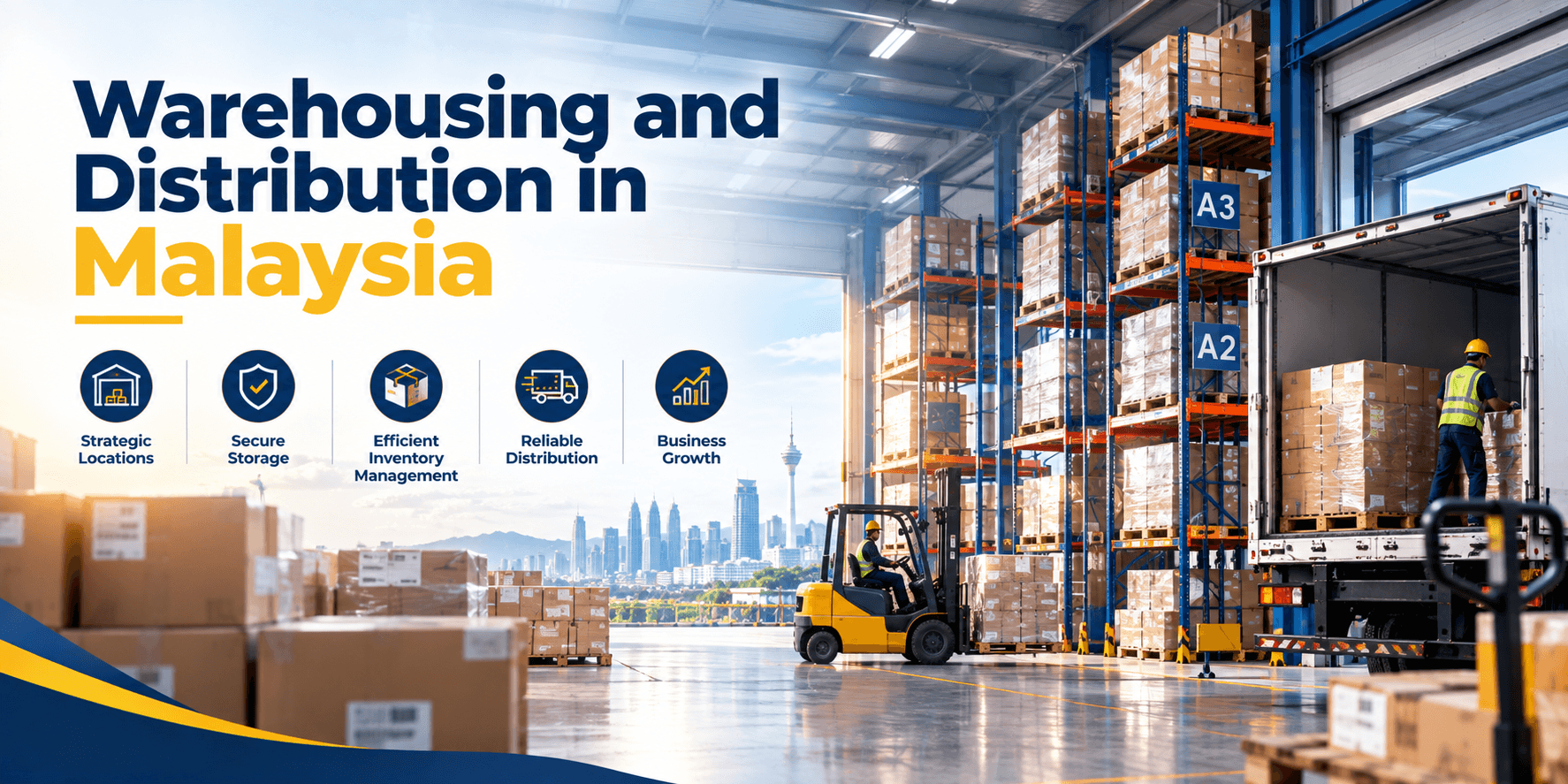
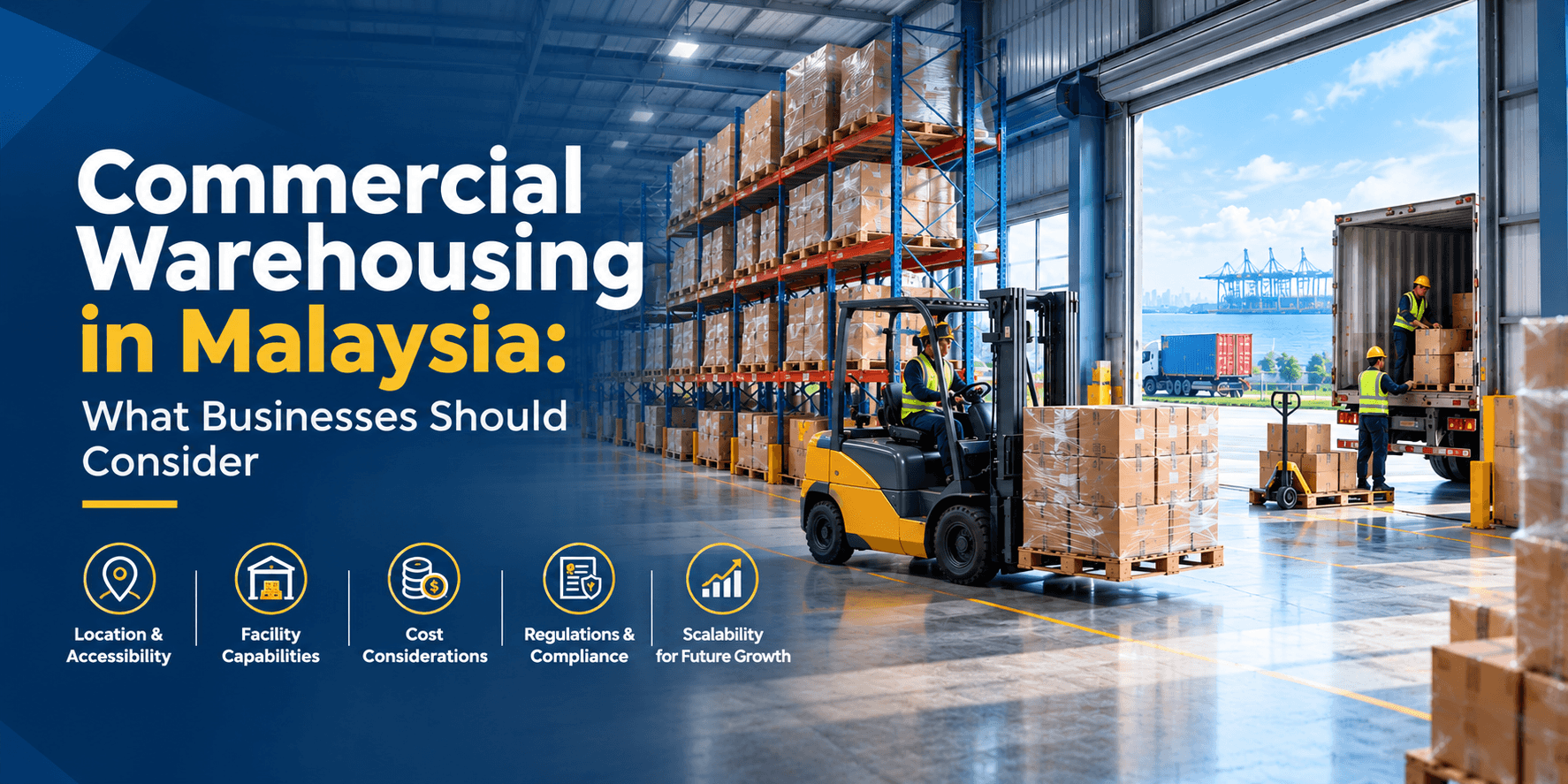
Commercial warehousing plays an important role in helping businesses store, organize and distribute goods efficiently. For companies managing regular inventory, seasonal demand or distribution across different locations, choosing suitable commercial warehousing in Malaysia can support smoother day-to-day logistics.
The right warehouse is not simply a place to keep products. Businesses also need to consider location, storage requirements, accessibility, inventory handling and how warehousing connects with transportation and distribution.
What Is Commercial Warehousing?
Commercial warehousing refers to the storage and handling of goods for business purposes. It can support companies that need temporary or ongoing space to hold inventory before goods are delivered to customers, retailers, distributors or other business locations.
Depending on the business and type of cargo, warehousing may form one part of a wider logistics process that includes transportation, inventory management and distribution.
Why Do Businesses Use Warehousing Services?
Businesses may use warehousing services in Malaysia for several reasons.
Managing Inventory
Warehousing provides businesses with dedicated space to hold stock before it is needed for delivery or distribution.
This can be useful for companies that receive goods in larger quantities but distribute them gradually.
Supporting Distribution
A warehouse can serve as a point between suppliers and final delivery locations. Goods can be stored before being dispatched according to delivery schedules and customer requirements.
Handling Seasonal Demand
Some businesses experience changes in inventory requirements throughout the year. Additional warehouse space can help accommodate periods when stock levels increase.
Reducing Pressure on Business Premises
Businesses with limited space may use commercial warehouse facilities rather than storing large quantities of inventory at their offices, shops or production locations.
What Should Businesses Consider When Choosing a Warehouse in Malaysia?
Choosing a commercial warehouse in Malaysia requires more than comparing available storage space. Businesses should consider how the facility fits their overall supply chain.
Warehouse Location
Location can affect transportation planning, delivery schedules and overall logistics costs.
A warehouse that is positioned appropriately for suppliers, customers or distribution routes may make it easier to move goods between different points in the supply chain.
Businesses should therefore consider the locations they regularly serve before selecting a warehouse.
Storage Requirements
Different products can require different storage arrangements.
Before choosing a warehouse, businesses should consider:
- Quantity of goods to be stored
- Product dimensions and weight
- Required storage space
- Packaging requirements
- Frequency of stock movement
- Length of storage
- Any special handling requirements
Clearly defining these requirements can help businesses identify a warehouse solution that matches their inventory.
Accessibility and Transportation
Warehouse accessibility is another important consideration.
Businesses should consider how easily vehicles can access the facility for loading and unloading. They should also consider how warehousing connects with their transportation requirements.
For example, a company may need goods moved from a supplier to a warehouse and later transported from the warehouse to multiple customer locations.
Inventory Management
Businesses should also establish how inventory will be organized and monitored.
Clear inventory procedures can help businesses keep track of incoming goods, stored stock and outgoing shipments.
Before selecting a warehouse service, businesses can ask how inventory is recorded, organized and released for delivery.
Loading and Unloading Requirements
The movement of goods into and out of a warehouse should also be considered.
Businesses should understand their expected loading and unloading frequency, cargo characteristics and vehicle requirements. This can help reduce operational issues when inventory needs to be moved.
Warehousing and Transportation: How They Work Together
Warehousing and transportation are closely connected parts of the logistics process.
A typical flow may look like:
Supplier → Transportation → Warehouse → Storage → Distribution → Customer
For example, goods may first be transported from a supplier to a warehouse. The inventory can then remain in storage until it is required for distribution.
When an order is ready, the goods can be prepared for transportation to the next destination.
This is why businesses should evaluate warehousing alongside their transportation requirements rather than treating storage as a completely separate logistics activity.
For businesses that regularly move commercial cargo, combining appropriate storage planning with transportation planning can make the overall logistics process easier to coordinate.
What Types of Cargo May Require Commercial Warehousing?
Commercial warehousing can be relevant to many types of businesses, depending on their products and storage requirements.
Examples include:
- Retail inventory
- Wholesale goods
- Manufacturing materials
- Packaged commercial products
- Distribution stock
- Seasonal inventory
- Imported goods awaiting distribution
However, storage requirements vary significantly between products. Businesses should confirm that a warehouse is suitable for the specific type of goods being stored before making arrangements.
How to Evaluate a Warehousing Service
Before choosing a warehouse provider, businesses can compare several practical factors.
Consider asking:
- Where is the warehouse located?
- How much storage space is available?
- Is the storage arrangement suitable for the type of goods?
- How are incoming and outgoing goods handled?
- How is inventory recorded and monitored?
- How accessible is the warehouse for transportation?
- What are the charges and what do they include?
- Are there any additional handling or storage requirements?
Having clear answers to these questions can make it easier to compare different warehouse services in Malaysia.
Commercial Warehousing Checklist for Businesses
Before selecting a warehousing solution, businesses can use this checklist:
- Define the amount of inventory to be stored
- Identify the type and dimensions of the goods
- Determine expected storage duration
- Consider the warehouse location
- Review loading and unloading requirements
- Understand inventory handling procedures
- Consider transportation and distribution requirements
- Ask about storage and handling charges
- Confirm any special storage requirements
- Compare the service with the company’s overall logistics needs
A clear checklist can help businesses avoid choosing warehouse space based only on price or available capacity.
Commercial Warehousing Services from J&G Global Logistics
J&G Global Logistics provides commercial warehousing solutions in Malaysia designed to support businesses with storage, inventory management and cargo movement. Its warehousing service includes flexible storage options for both short-term overflow and longer-term inventory positioning, with locations referenced around key industrial areas in JB, KL and Selangor.
Businesses can also choose between bonded and non-bonded warehousing depending on their import, export or cross-border requirements. J&G’s warehousing services include order fulfilment activities such as picking, packing and labelling, as well as full-container stuffing and de-stuffing for cargo that needs to move onward by road, sea or air.
Because warehousing can be connected with transportation and freight requirements, businesses can plan storage and cargo movement as part of a wider logistics process rather than treating them as separate activities.
If you’re looking for commercial warehousing in Malaysia, J&G Global Logistics provides flexible warehousing solutions to support businesses with storage, order fulfilment, container handling and wider logistics requirements. Request a quote today.
Frequently Asked Questions
Commercial warehousing is the storage and handling of goods for business purposes. It can support inventory storage, distribution and wider logistics operations.
Businesses may use warehousing services to store inventory, manage stock levels, support distribution and accommodate periods of higher demand.
Consider factors such as location, storage capacity, cargo requirements, accessibility, inventory handling, loading and unloading arrangements, and overall cost.
Businesses should identify the quantity, dimensions, type and expected storage duration of their goods, along with any specific handling or storage requirements.
Yes. Warehouse location can influence transportation planning, accessibility and the distance goods need to travel between suppliers, storage facilities and delivery destinations.
Yes. Warehousing can form part of a broader logistics process in which goods are transported to a warehouse, stored and subsequently distributed to their next destination.
Businesses can compare warehouse location, capacity, storage suitability, inventory procedures, loading and unloading arrangements, transportation access, pricing and other service requirements.