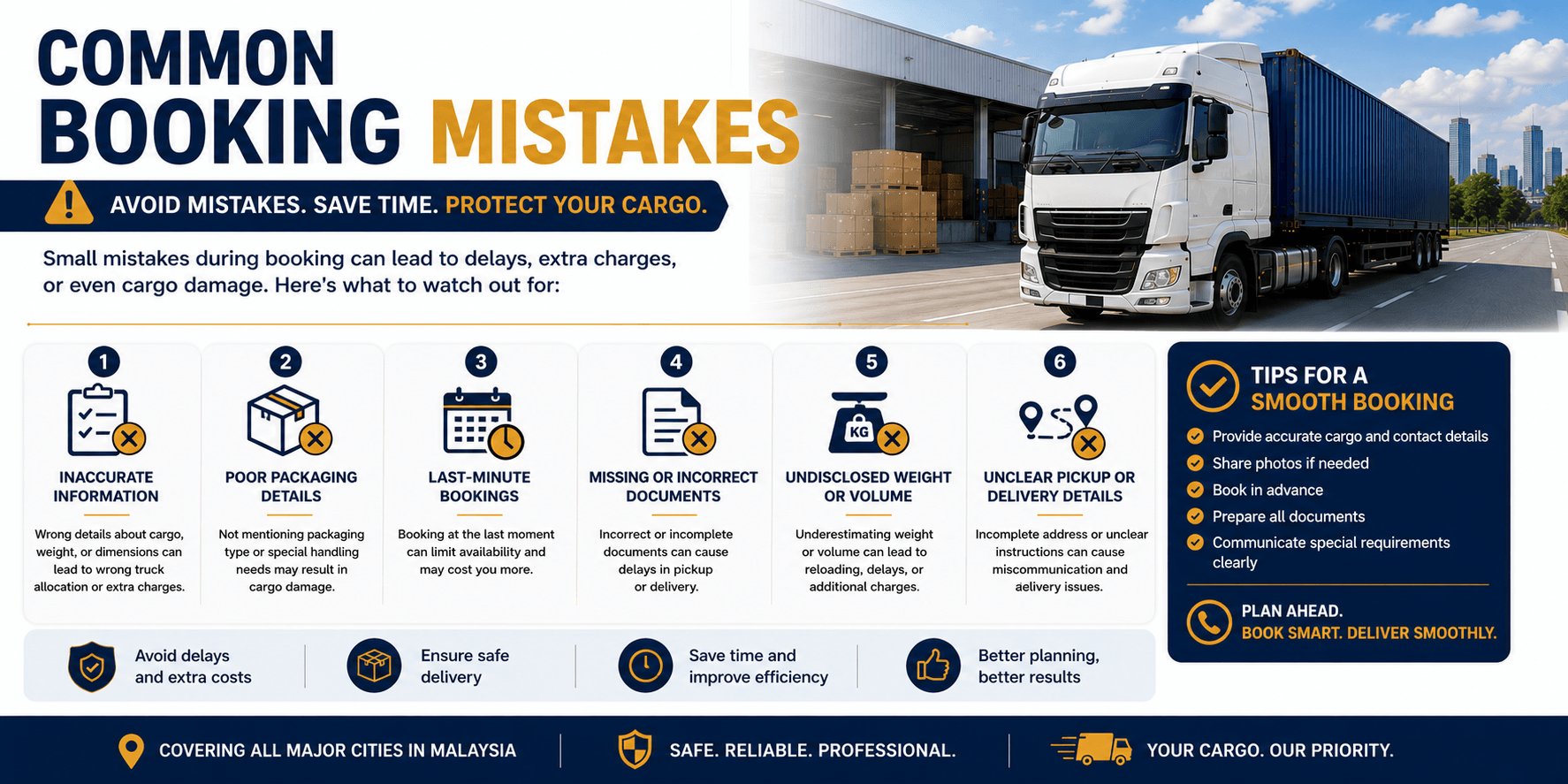
Common freight booking mistakes can lead to transportation delays, unexpected costs, unsuitable vehicle allocation and operational disruptions that affect the wider supply chain. Booking commercial freight involves more than simply arranging a vehicle to move goods from one location to another. Businesses that understand the most common booking mistakes can improve shipment planning, communicate more effectively with logistics providers and ensure commercial freight is coordinated efficiently from the start.
Understanding the most common freight booking mistakes helps businesses prepare accurate shipment information, improve communication with logistics providers and ensure transportation is planned correctly from the start. Whether arranging a one-time delivery or managing recurring commercial freight, following a structured booking process helps reduce avoidable issues while improving overall logistics efficiency.
Rather than focusing only on freight rates, businesses should evaluate shipment requirements, booking accuracy and transportation planning before confirming any commercial freight booking.
Why Freight Bookings Go Wrong
Many transportation issues occur before a vehicle even arrives for collection. Incomplete shipment information, unrealistic delivery expectations or poor communication can create avoidable problems that affect delivery schedules and freight coordination.
A well-planned freight booking allows logistics providers to:
- Allocate the correct vehicle.
- Plan suitable transport routes.
- Schedule loading and unloading efficiently.
- Coordinate delivery timelines.
- Prepare for special cargo handling where required.
Providing complete and accurate information during the booking stage helps reduce operational risks while improving transportation efficiency.
Freight Booking Mistakes at a Glance
Businesses can avoid many common transportation problems by avoiding these frequent booking mistakes:
- Providing incomplete cargo information.
- Choosing the wrong vehicle size.
- Booking transport at the last minute.
- Ignoring loading and unloading requirements.
- Focusing only on the lowest price.
- Failing to review the freight quotation.
- Not confirming delivery site requirements.
Addressing these issues before confirming a booking helps businesses minimise delays, improve shipment planning and support more reliable freight movement.
Mistake 1: Providing Incomplete Cargo Information
One of the most common freight booking mistakes is submitting incomplete or inaccurate shipment details.
Logistics providers rely on cargo information to recommend suitable transportation arrangements. Missing details can result in incorrect vehicle allocation, scheduling delays or additional operational adjustments.
Before requesting a quotation, businesses should prepare:
- Cargo dimensions
- Total shipment weight
- Number of pallets or packages
- Cargo type
- Collection address
- Delivery destination
- Preferred collection date
- Special handling requirements
Providing accurate shipment information enables logistics providers to coordinate transportation more efficiently while reducing unnecessary delays.
Mistake 2: Choosing the Wrong Vehicle
Selecting a vehicle based only on availability or cost can create operational problems if it does not match the shipment’s requirements.
A vehicle that is too small may require additional trips or rescheduling, while an oversized vehicle can increase transportation costs unnecessarily.
Experienced logistics providers evaluate factors such as:
- Shipment dimensions
- Cargo weight
- Loading method
- Delivery access
- Cargo handling requirements
Matching the correct vehicle to the shipment helps improve transportation efficiency while supporting safer cargo handling.
Mistake 3: Booking Freight Too Late
Leaving transport arrangements until the last minute reduces scheduling flexibility and can limit vehicle availability, particularly during busy commercial periods.
Businesses with recurring freight requirements should schedule transportation in advance whenever possible. Early booking allows logistics providers to coordinate routes, allocate suitable vehicles and organise collection times that align with warehouse operations and delivery schedules.
Planning ahead also provides additional time to verify shipment information before transport begins, reducing the likelihood of avoidable booking errors.
Mistake 4: Overlooking Loading and Unloading Requirements
Loading and unloading arrangements are often overlooked during the booking process, yet they play an important role in transportation planning.
Before confirming a booking, businesses should inform the logistics provider if the shipment requires:
- Forklift access
- Tail lift vehicles
- Manual loading or unloading
- Restricted site access
- Specific loading times
- Warehouse appointment schedules
Sharing this information early helps logistics providers allocate the appropriate equipment and manpower while avoiding unnecessary delays during collection or delivery.
Mistake 5: Focusing Only on the Lowest Freight Price
While transportation costs are an important consideration, selecting a logistics provider based solely on the lowest quotation may not deliver the best value. A lower freight rate may exclude services that are necessary for efficient cargo transportation, resulting in unexpected costs or operational challenges later.
When comparing freight quotations, businesses should consider:
- Vehicle suitability
- Route coverage
- Commercial freight experience
- Cargo handling capabilities
- Communication during transportation
- Delivery scheduling flexibility
- Additional charges or optional services
Evaluating the overall service rather than price alone helps businesses make more informed freight booking decisions.
Mistake 6: Not Reviewing the Freight Quotation Carefully
Many businesses accept freight quotations without understanding what is included. This can lead to confusion regarding transportation scope, scheduling or additional service charges.
Before confirming a booking, review whether the quotation includes:
- Transportation charges
- Pickup and delivery locations
- Vehicle type
- Loading or unloading assistance
- Waiting time (if applicable)
- Delivery schedule
- Special cargo handling requirements
Clarifying these details beforehand helps avoid misunderstandings and ensures both parties have clear expectations.
Mistake 7: Not Confirming Delivery Site Requirements
Collection and delivery locations may have operational requirements that affect transportation planning. Failing to communicate these conditions can result in delays when the vehicle arrives.
Businesses should inform the logistics provider about:
- Restricted access roads
- Height or weight restrictions
- Loading bay availability
- Warehouse operating hours
- Appointment-only deliveries
- Site contact personnel
Providing this information allows the logistics provider to plan the delivery more effectively and minimise disruptions.
Freight Booking Checklist for Businesses
Before confirming a commercial freight booking, use this checklist to ensure your shipment is properly prepared:
- Confirm cargo dimensions and weight
- Specify the cargo type
- Prepare accurate pickup and delivery addresses
- Inform the provider of loading and unloading requirements
- Confirm preferred pickup and delivery dates
- Review the freight quotation carefully
- Verify the recommended vehicle type
- Communicate any special handling requirements
- Confirm the contact person at both locations
Following this freight booking checklist helps businesses reduce booking errors while supporting smoother transportation planning.
Questions to Ask Before Confirming a Freight Booking
Asking the right questions before confirming a booking helps businesses avoid unnecessary issues during transportation.
Consider asking your logistics provider:
- Which vehicle is most suitable for my shipment?
- Does the quotation include all transportation-related charges?
- Are there any access requirements for the delivery location?
- What information is required before collection?
- Can recurring deliveries be arranged?
- How should fragile or oversized cargo be prepared?
Clear communication before transportation begins helps improve booking accuracy and supports more reliable freight operations.
How J&G Global Logistics Supports Commercial Freight Bookings
J&G Global Logistics helps businesses streamline commercial freight bookings through careful shipment planning, practical logistics coordination and clear communication. Before transportation begins, the team reviews cargo information, delivery requirements and operational priorities to recommend suitable transport solutions for each shipment.
Supporting manufacturers, distributors, wholesalers, retailers and warehouse operators across Malaysia, J&G Global Logistics focuses on helping businesses avoid common booking mistakes that could lead to delays, unnecessary costs or operational disruptions.
Whether arranging one-time deliveries or recurring commercial freight, accurate booking information and proper planning help ensure transportation runs efficiently from collection through to delivery.
Need assistance with your next commercial freight booking? Contact J&G Global Logistics today to discuss your shipment requirements and receive a tailored transportation solution for your business.
Frequently Asked Questions
Common freight booking mistakes include providing incomplete cargo information, choosing the wrong vehicle, booking transport too late, overlooking loading requirements and failing to review freight quotations carefully. Avoiding these mistakes helps businesses improve transportation efficiency and reduce avoidable delays.
Accurate cargo information allows logistics providers to recommend the correct vehicle, allocate loading space efficiently and plan transportation more effectively. Complete shipment details also help minimise scheduling issues and unexpected operational changes.
Businesses should prepare cargo dimensions, shipment weight, pickup and delivery addresses, preferred transportation dates, loading requirements and any special handling instructions. Providing complete information supports smoother freight coordination.
Whenever possible, businesses should arrange freight transportation several days in advance, especially for recurring deliveries or larger commercial shipments. Early booking provides greater scheduling flexibility and improves vehicle availability.
Businesses should review the quotation carefully to confirm the vehicle type, transportation scope, pickup and delivery locations, included services, scheduling arrangements and any additional charges that may apply.
The lowest freight quotation may not always provide the best value. Businesses should also consider service reliability, communication, vehicle suitability, route coverage and commercial freight experience when selecting a logistics provider.
J&G Global Logistics supports businesses by reviewing shipment requirements, recommending suitable transportation solutions and coordinating commercial freight bookings with clear communication and practical logistics planning across Malaysia.