
Many businesses make logistics decisions based on outdated assumptions or incomplete information. These common shipping myths can lead to unnecessary transportation costs, shipment delays, poor planning and unrealistic expectations when arranging commercial freight.
Whether moving cargo within Malaysia or coordinating cross-border deliveries, understanding how modern logistics actually works helps businesses make better transportation decisions. Commercial freight involves much more than simply moving goods from one location to another. Factors such as cargo characteristics, vehicle selection, delivery schedules, warehousing and supply chain coordination all influence how shipments are planned and executed.
For manufacturers, distributors, wholesalers, retailers and warehouse operators, separating fact from fiction can improve freight planning, reduce operational risks and strengthen long-term supply chain performance.
This guide explains some of the most common shipping myths, the realities behind them and what businesses should know before arranging commercial transportation.
Why Shipping Myths Can Affect Business Operations
Many shipping misconceptions originate from outdated practices, consumer parcel delivery experiences or assumptions that all logistics services operate the same way.
In commercial logistics, every shipment is different. Cargo dimensions, delivery locations, transportation modes, loading requirements and scheduling all influence how freight is planned.
Relying on inaccurate assumptions can result in:
- Selecting unsuitable transportation solutions
- Unexpected logistics costs
- Delivery delays
- Inefficient warehouse coordination
- Poor communication between stakeholders
- Reduced supply chain efficiency
Understanding how commercial logistics providers evaluate shipments allows businesses to plan transportation more effectively while avoiding costly misunderstandings.
Myth 1: The Cheapest Freight Option Is Always the Best
Many businesses assume that choosing the lowest quotation automatically reduces logistics costs. While competitive pricing is important, the cheapest freight option does not always provide the best overall value.
Freight pricing reflects several operational factors, including:
- Cargo dimensions and weight
- Vehicle suitability
- Transportation distance
- Delivery schedules
- Loading and unloading requirements
- Route complexity
- Additional logistics services
A quotation that appears cheaper may exclude services that are necessary for your shipment, resulting in additional costs later.
Instead of focusing solely on price, businesses should evaluate the overall transportation solution, including service reliability, communication, vehicle suitability and the provider’s experience with commercial freight.
Myth 2: All Logistics Companies Offer the Same Service
Another common shipping myth is that every logistics provider delivers identical services, making price the only difference between companies.
In reality, logistics providers vary significantly in terms of:
- Transportation capabilities
- Geographic coverage
- Commercial freight experience
- Industry expertise
- Warehousing services
- Cross-border transportation support
- Customer communication
- Shipment planning
Some providers specialise in domestic transportation, while others focus on integrated logistics solutions that include warehousing, air freight, sea freight and cross-border freight coordination.
Selecting a logistics provider whose capabilities match your operational requirements often delivers greater long-term value than simply choosing the lowest-cost option.
Myth 3: Faster Shipping Is Always Better
Businesses often assume that the fastest transportation method is automatically the most suitable choice.
However, selecting the appropriate freight solution depends on several operational factors, including shipment urgency, cargo characteristics, delivery schedules and transportation costs.
For example:
- Air freight is suitable for urgent or time-sensitive shipments.
- Sea freight is often more appropriate for larger international cargo.
- Road freight provides flexible transportation for domestic and regional deliveries.
Rather than selecting the fastest option by default, businesses should choose the transportation method that best aligns with their operational priorities, delivery requirements and overall supply chain strategy.
Myth 4: Freight Transportation Only Begins When the Vehicle Arrives
Many people believe transportation starts when the truck reaches the collection point.
In reality, successful freight movement begins much earlier through careful logistics planning.
Before collection, businesses and logistics providers typically coordinate:
- Cargo information
- Vehicle selection
- Pickup scheduling
- Delivery planning
- Warehouse readiness
- Loading requirements
- Route coordination
- Communication between all parties
The planning stage plays a significant role in reducing avoidable delays and ensuring shipments move efficiently throughout the supply chain.
Proper preparation before collection often determines whether transportation proceeds smoothly or encounters operational disruptions.
Myth 5: Cross-Border Shipping Is Too Complicated for Regular Business Operations
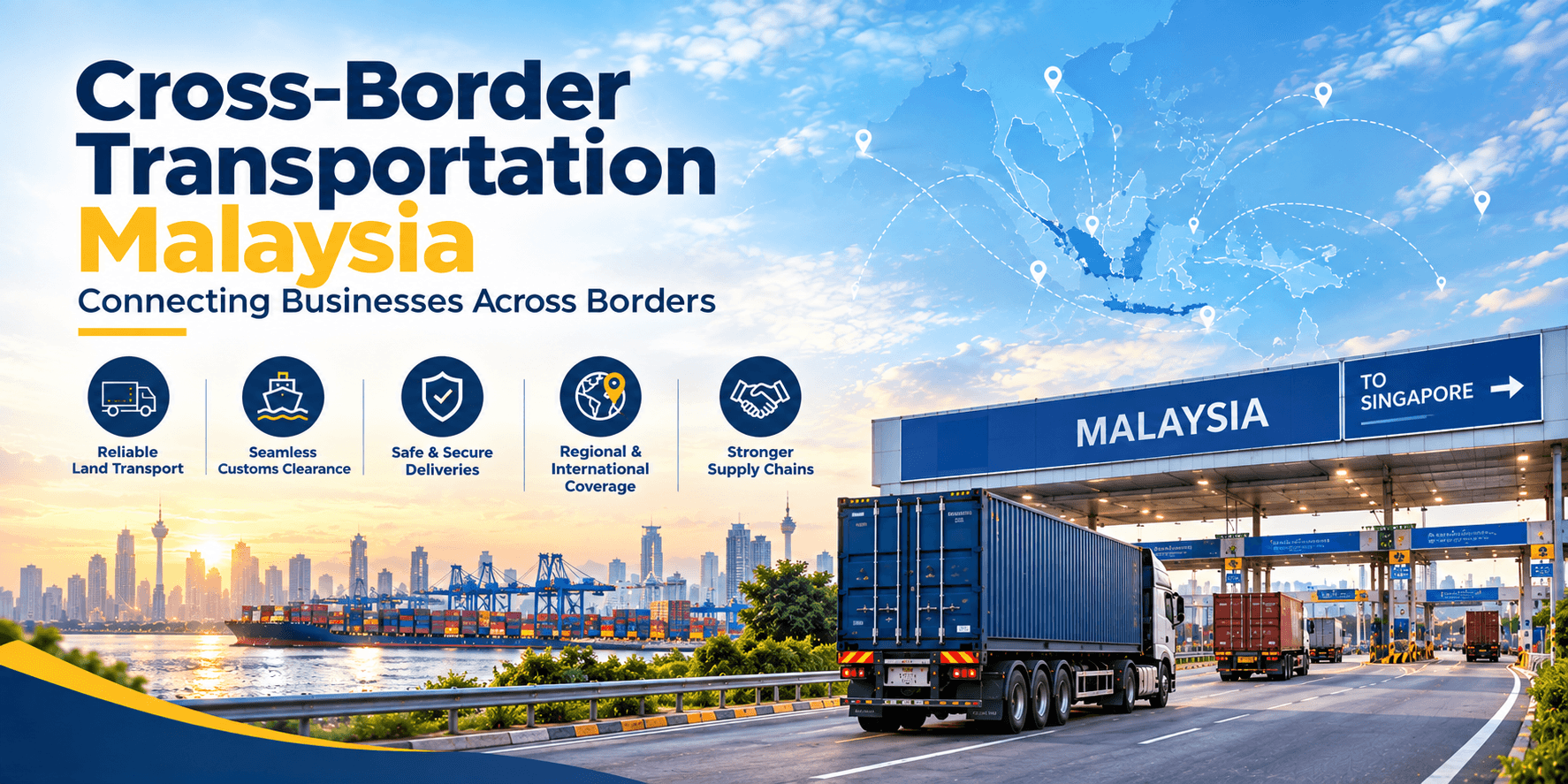
Many businesses assume that transporting cargo between Malaysia and Singapore is only suitable for large corporations with dedicated logistics teams.
In reality, cross-border freight is a routine part of daily commercial operations for manufacturers, distributors, wholesalers, retailers and warehouse operators throughout the region.
With proper planning, businesses can coordinate regular cross-border shipments by preparing accurate cargo information, scheduling collections in advance and working with a logistics provider experienced in regional transportation.
Businesses should prepare:
- Pickup and delivery locations
- Cargo dimensions and weight
- Number of pallets or packages
- Preferred collection schedule
- Loading and unloading requirements
- Contact details for both locations
Providing complete shipment information allows logistics providers to coordinate transportation more efficiently while helping businesses maintain consistent supply chain operations.
Myth 6: Warehousing Is Only for Long-Term Storage
Warehousing is often viewed simply as a place to store inventory until it is needed.
Modern warehousing plays a much broader role within commercial logistics by supporting inventory management, order fulfilment and distribution planning.
Many businesses use warehousing to:
- Manage inventory more efficiently
- Consolidate commercial shipments
- Prepare freight for distribution
- Support recurring deliveries
- Improve stock availability
- Reduce transportation delays
Integrating warehousing with transportation allows businesses to improve freight coordination while supporting more responsive supply chain operations.
Myth 7: Once Freight Is Collected, There Is Nothing More Businesses Can Do
Some businesses believe that once cargo has been collected, responsibility rests entirely with the logistics provider.
In reality, successful freight transportation depends on ongoing communication throughout the shipment.
Businesses should continue coordinating with their logistics provider by:
- Confirming delivery schedules
- Communicating operational changes
- Informing receiving personnel
- Updating contact information if required
- Preparing unloading arrangements
Maintaining communication throughout transportation helps minimise misunderstandings while allowing any unexpected operational changes to be managed more efficiently.
Myth 8: Logistics Is Only About Moving Cargo
Perhaps the biggest misconception is that logistics simply means transporting goods from one location to another.
Commercial logistics is a complete process that combines transportation with planning, coordination and supply chain management.
An experienced logistics provider supports businesses by helping with:
- Freight planning
- Vehicle selection
- Route coordination
- Warehousing
- Cross-border transportation
- Shipment scheduling
- Commercial freight management
- Ongoing logistics support
By taking a broader approach to logistics, businesses can improve operational efficiency while creating a more resilient supply chain.
How Businesses Can Avoid Common Shipping Misconceptions
Avoiding common shipping myths begins with understanding that every commercial shipment has unique operational requirements. Rather than relying on assumptions or previous experiences with parcel delivery, businesses should evaluate each shipment based on its cargo characteristics, delivery schedule and supply chain objectives.
Before arranging commercial freight, businesses should:
- Prepare accurate cargo information.
- Compare logistics providers based on service quality, not only price.
- Select transportation methods that match business requirements.
- Coordinate warehouse and inventory operations before collection.
- Maintain communication throughout the shipment.
- Build long-term relationships with experienced logistics providers.
Taking these practical steps helps reduce avoidable transportation issues while improving freight planning and overall logistics efficiency.
Why Businesses Trust J&G Global Logistics
J&G Global Logistics supports manufacturers, distributors, wholesalers, retailers and warehouse operators with practical commercial logistics solutions across Malaysia. By combining domestic transportation, cross-border transportation, sea freight, air freight and warehousing services, the company helps businesses manage freight more efficiently while supporting reliable supply chain operations.
Rather than applying a standard transportation approach to every shipment, J&G Global Logistics reviews cargo characteristics, operational priorities and delivery schedules before recommending suitable logistics solutions. This practical planning helps businesses avoid common shipping misconceptions while improving transportation efficiency.
Whether arranging recurring commercial freight, supporting warehouse distribution or coordinating cross-border transportation between Johor Bahru and Singapore, J&G Global Logistics focuses on organised planning, responsive communication and dependable logistics support.
If your business is looking for a trusted logistics partner that understands commercial freight and modern supply chain requirements, contact J&G Global Logistics today to discuss your transportation needs and discover tailored logistics solutions.
Frequently Asked Questions
Some of the most common shipping myths include believing that the cheapest freight option is always the best, all logistics companies provide identical services, faster shipping is always better and logistics only involves transporting cargo. Understanding the realities behind these misconceptions helps businesses make better logistics decisions.
A lower freight quotation may exclude important services such as suitable vehicle allocation, specialised cargo handling or flexible scheduling. Businesses should evaluate overall service quality, reliability and operational capabilities rather than comparing price alone.
No. Logistics providers differ in their transportation networks, commercial freight experience, warehousing capabilities, cross-border expertise, customer support and range of logistics services. Choosing a provider that matches your business requirements often delivers better long-term value.
Air freight offers shorter transit times, but it is not always the most suitable option. The best transportation method depends on shipment urgency, cargo characteristics, delivery schedules and operational requirements.
Freight planning allows businesses to prepare accurate shipment information, coordinate warehouse operations, select suitable transportation and reduce avoidable delays before cargo is collected.
Businesses can avoid shipping misconceptions by understanding how commercial logistics works, preparing complete cargo information, maintaining clear communication and working with an experienced logistics provider that offers practical transportation guidance.
J&G Global Logistics helps businesses by reviewing shipment requirements, recommending suitable transportation solutions, coordinating commercial freight and providing integrated logistics services that include domestic transportation, cross-border freight, sea freight, air freight and warehousing. This structured approach supports more efficient and reliable supply chain operations.