
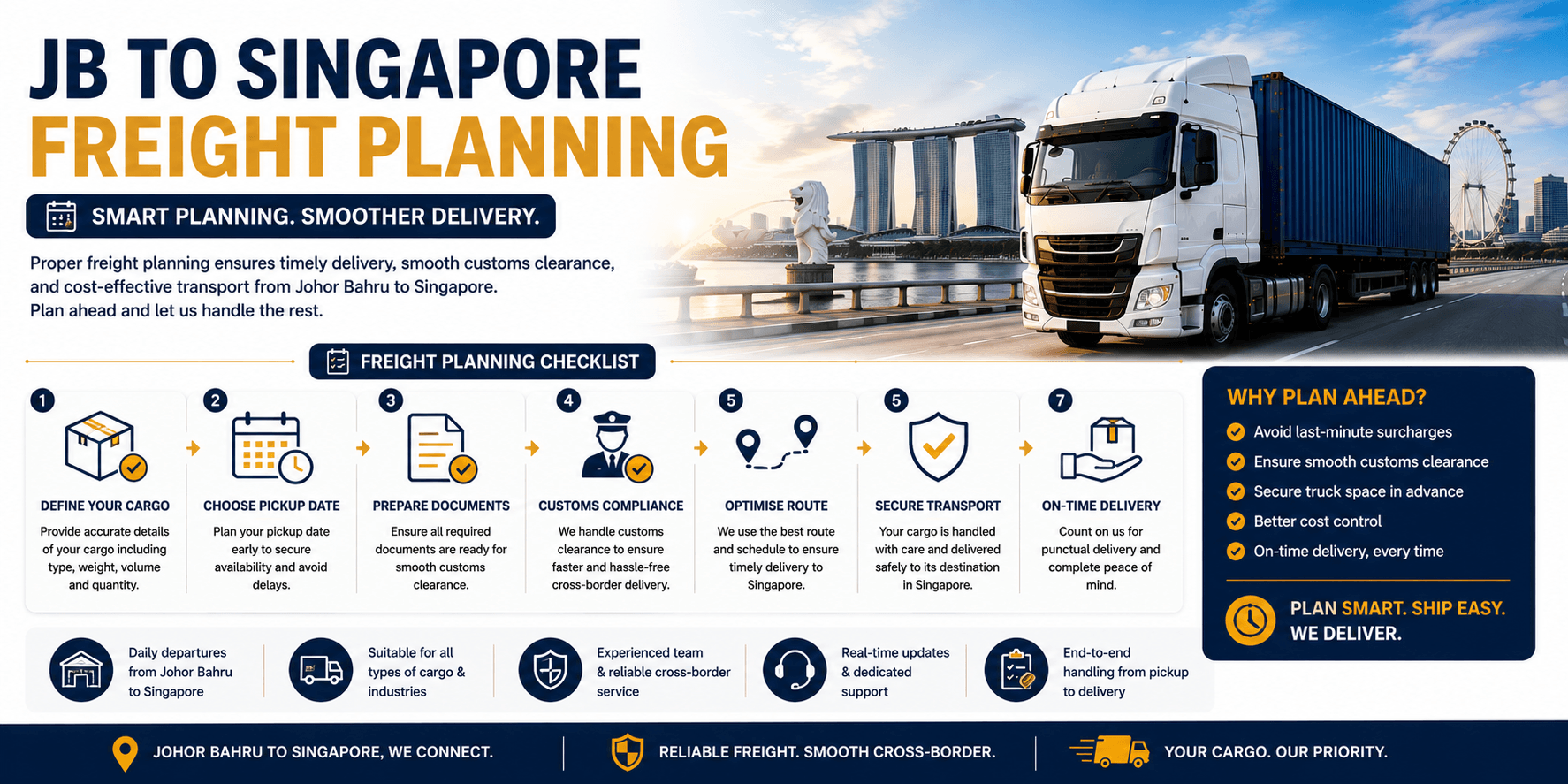
Businesses that regularly transport commercial cargo between Johor Bahru and Singapore often focus on arranging transportation without first establishing a structured freight planning process. Effective JB to Singapore freight planning begins well before a vehicle is scheduled for collection. It involves organising shipment information, aligning internal operations and preparing cargo so transportation can proceed efficiently once the booking is confirmed.
For manufacturers, distributors, wholesalers, warehouse operators and retailers, consistent freight planning helps improve supply chain coordination while reducing avoidable disruptions. Whether managing recurring shipments or arranging one-off commercial deliveries, a structured planning process allows businesses to communicate more effectively with logistics providers and keep cargo moving according to operational requirements.
This guide explains how businesses can prepare for cross-border freight movement between Johor Bahru and Singapore before transportation begins, helping improve shipment readiness and overall logistics efficiency.
Step 1: Define the Purpose of the Shipment
Every shipment should begin with a clear understanding of its operational objective. Different business activities require different planning approaches, and identifying the shipment’s purpose helps determine scheduling priorities, cargo preparation and delivery expectations.
Businesses may arrange freight between Johor Bahru and Singapore for:
- Inventory replenishment
- Warehouse transfers
- Manufacturing supply movement
- Customer order fulfilment
- Distribution centre replenishment
- Business-to-business deliveries
Understanding why the shipment is being arranged helps internal teams coordinate inventory, warehouse operations and transport schedules more effectively.
Step 2: Build an Internal Shipment Schedule
Successful JB to Singapore freight planning depends on internal coordination before transportation is booked. Businesses should align freight movement with production schedules, warehouse operations and receiving availability to reduce unnecessary waiting time or last-minute changes.
Before confirming collection, businesses should review:
- Production completion dates
- Inventory availability
- Warehouse operating hours
- Receiving schedules in Singapore
- Internal approval processes
- Collection time preferences
Creating a realistic shipment schedule helps ensure cargo is ready when transport arrives and supports smoother coordination throughout the delivery process.
Step 3: Prepare Shipment Information Before Requesting a Quote
One of the most common causes of freight delays is incomplete shipment information during the planning stage. Providing accurate details from the beginning allows logistics providers to recommend suitable transport arrangements and coordinate deliveries more efficiently.
Businesses should prepare:
- Collection address
- Delivery address
- Cargo dimensions
- Cargo weight
- Number of pallets or packages
- Cargo description
- Preferred collection date
- Preferred delivery timeframe
- Contact person at both locations
Having this information ready before requesting a quotation helps improve booking accuracy while reducing unnecessary revisions later in the planning process.
Step 4: Coordinate Internal Teams Before Collection
Freight planning is not only the responsibility of the logistics provider. Internal departments should also be prepared before the scheduled collection to ensure cargo can be loaded efficiently.
Businesses should confirm that:
- Warehouse staff are aware of the collection schedule.
- Cargo has been packed securely.
- Shipment labels are clearly displayed.
- Loading equipment is available if required.
- Collection areas are accessible.
- Responsible personnel are available during pickup.
Good internal coordination helps minimise loading delays while keeping transportation schedules on track.
Step 5: Establish Clear Communication Before Freight Collection
One of the most overlooked parts of JB to Singapore freight planning is communication between everyone involved in the shipment. Even when cargo is ready, unclear instructions or missing information can result in unnecessary delays during collection or delivery.
Before the scheduled pickup, businesses should ensure:
- The logistics provider has the latest shipment information.
- Collection and delivery contacts have been confirmed.
- Internal teams are aware of the collection schedule.
- Any changes to cargo quantity or shipment requirements have been communicated.
- Receiving personnel in Singapore have been informed of the expected delivery window.
Early communication helps reduce misunderstandings while allowing shipments to proceed according to plan.
Step 6: Review Shipment Readiness Before Dispatch
Before freight leaves the warehouse, businesses should perform a final review to confirm everything is ready for transportation. A structured pre-dispatch review helps identify small issues before they become costly delivery problems.
A final shipment review should include:
- Cargo dimensions and weight have been verified.
- Goods are packed securely.
- Pallet counts match shipment records.
- Delivery address has been confirmed.
- Labels are visible and accurate.
- Special handling instructions have been communicated.
- Collection documentation is complete.
Completing these checks before collection helps businesses reduce operational disruptions while improving freight accuracy.
JB to Singapore Freight Planning Checklist
Businesses managing regular cross-border shipments can use the following checklist before arranging transportation:
- Confirm the purpose of the shipment.
- Align collection with warehouse operations.
- Prepare complete shipment information.
- Coordinate internal warehouse teams.
- Confirm communication with all parties.
- Review shipment readiness before dispatch.
- Verify delivery schedules.
- Notify the logistics provider of any operational changes.
Using a standard freight planning process helps businesses improve consistency while reducing avoidable planning errors across recurring shipments.
Common Freight Planning Challenges
Even well-organised businesses can encounter planning issues if shipments are not properly coordinated.
Some common challenges include:
- Inventory not ready before collection.
- Last-minute changes to shipment quantities.
- Inaccurate cargo measurements.
- Delays in warehouse preparation.
- Poor communication between departments.
- Incomplete delivery instructions.
- Changes to customer receiving schedules.
Identifying these issues early allows businesses to adjust their planning process and minimise disruption before transportation begins.
How J&G Global Logistics Supports JB to Singapore Freight Planning
J&G Global Logistics works closely with businesses to support structured JB to Singapore freight planning before cargo is collected. Rather than focusing only on transportation, the team helps customers organise shipment information, coordinate collection schedules and align freight movement with business operations.
By reviewing shipment requirements early in the planning process, J&G Global Logistics assists manufacturers, distributors, wholesalers, retailers and warehouse operators in preparing commercial cargo for efficient cross-border transportation between Johor Bahru and Singapore.
Whether businesses manage recurring freight movements or occasional commercial shipments, organised planning and clear coordination help improve operational efficiency while supporting more reliable logistics performance.
Looking to improve your JB to Singapore freight planning? Contact J&G Global Logistics today to discuss your shipment requirements and discover how structured planning can support smoother cross-border cargo movement.
Frequently Asked Questions
JB to Singapore freight planning is the process of preparing commercial shipments before transportation begins. It includes organising shipment information, coordinating internal operations and ensuring cargo is ready for efficient cross-border movement.
Proper freight planning helps businesses improve shipment coordination, reduce avoidable delays and ensure cargo is prepared before collection, supporting smoother logistics operations.
Businesses should prepare the pickup and delivery addresses, cargo dimensions, weight, shipment description, preferred collection schedule and contact details to help logistics providers coordinate transportation efficiently.
Freight planning often involves warehouse teams, inventory personnel, logistics coordinators, purchasing departments and receiving staff to ensure shipments are prepared accurately before transportation.
Whenever possible, businesses should begin planning several days before collection. Early preparation allows sufficient time to organise inventory, coordinate internal teams and finalise shipment information.
A freight planning checklist helps businesses standardise their shipping process, reduce planning mistakes, improve communication and ensure every shipment is prepared consistently before collection.
J&G Global Logistics supports businesses by helping organise shipment information, coordinate collection schedules and prepare commercial freight before transportation begins, enabling more efficient cross-border logistics operations.