Efficient logistics is one of the foundations of successful business operations. Choosing the right logistics company in Malaysia can make a significant difference in how businesses manage supply chains, coordinate freight, and maintain efficient day-to-day operations. While transportation focuses on moving goods from one location to another, logistics involves planning, coordinating, and managing the entire movement process to ensure products reach the right destination at the right time.
As businesses expand, logistics becomes increasingly important for managing suppliers, warehouses, inventory, production schedules, and customer deliveries. Working with a reliable logistics company in Malaysia helps organisations improve operational efficiency, strengthen supply chain performance, and minimise disruptions across day-to-day business activities.
Whether supporting domestic freight throughout Malaysia or coordinating cross-border shipments, experienced logistics providers help businesses manage increasingly complex supply chain requirements with greater confidence.
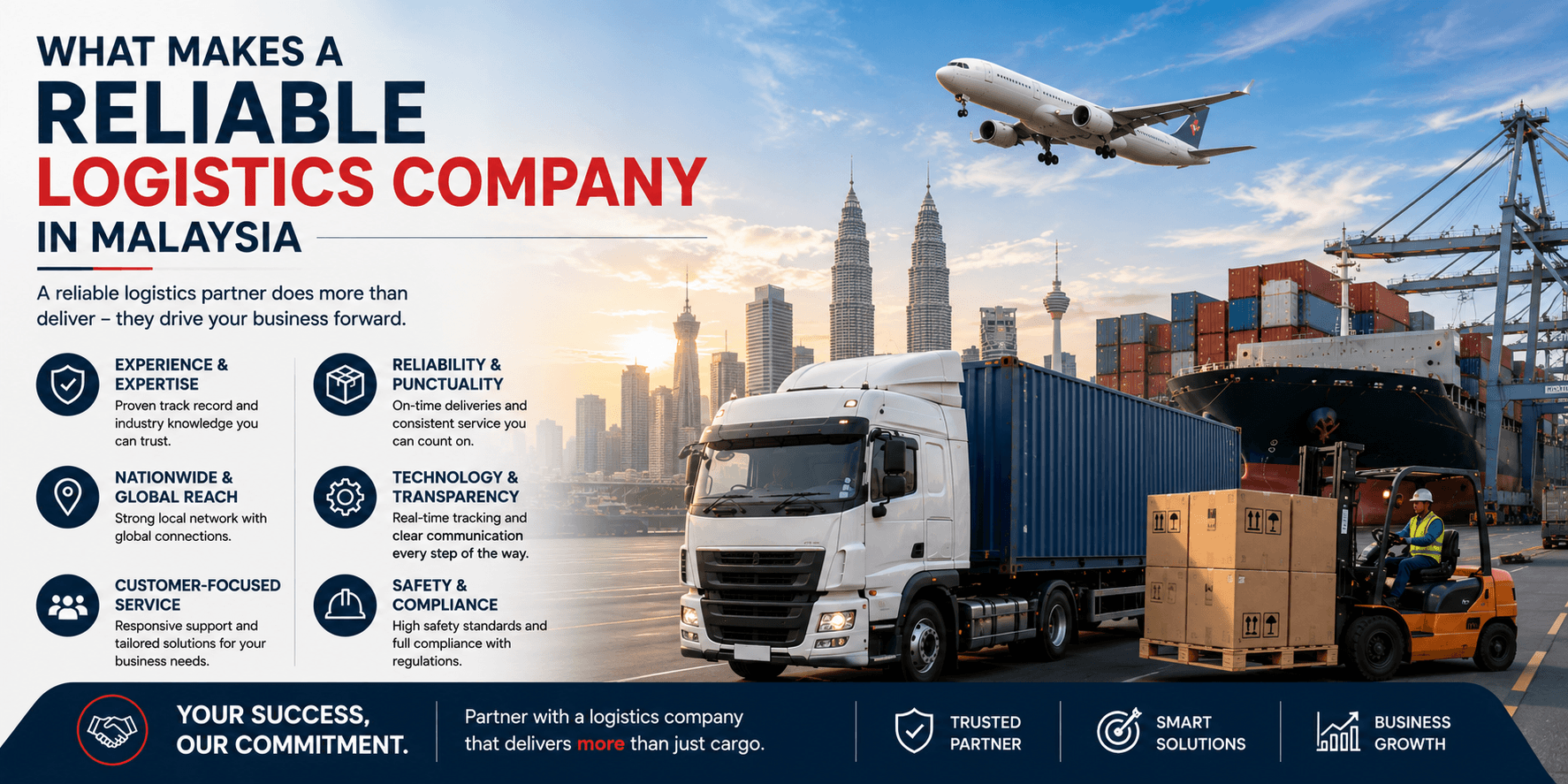
What Makes a Reliable Logistics Company?
A reliable logistics company in Malaysia provides more than transportation. It coordinates freight movement, delivery planning, supply chain activities, and operational communication to help businesses move goods efficiently while supporting inventory management, warehouse operations,s and long-term business growth.
Transportation vs Logistics: What’s the Difference?
Although the terms are often used interchangeably, transportation and logistics serve different purposes within a business.
| Transportation | Logistics |
|---|---|
| Focuses on moving cargo between locations | Coordinates the entire movement process from planning to delivery |
| Concerned with vehicles and freight movement | Includes transportation, scheduling, inventory coordination and supply chain planning |
| Usually shipment-based | Supports ongoing business operations |
| Executes deliveries | Plans, manages and optimises freight movement |
Understanding this distinction helps businesses determine when they need a transportation provider and when they require comprehensive logistics support.
What Does a Logistics Company Do?
A logistics company in Malaysia manages the planning and coordination required to move commercial goods efficiently throughout the supply chain.
Depending on business requirements, logistics services may include:
- Commercial freight coordination
- Domestic transportation planning
- Cross-border logistics support
- Supply chain coordination
- Warehouse-to-warehouse transfers
- Distribution centre deliveries
- Retail inventory replenishment
- Manufacturing logistics support
- Scheduled recurring freight management
Rather than simply arranging transportation, logistics providers help businesses coordinate multiple activities that contribute to efficient cargo movement.
When Does a Business Need a Logistics Company?
Many businesses initially arrange transportation on a shipment-by-shipment basis. As operations grow, transportation alone often becomes insufficient.
Businesses typically benefit from working with a logistics company in Malaysia when they:
- Operate multiple warehouses or branches
- Coordinate deliveries between suppliers and customers
- Manage recurring freight movements
- Require domestic and cross-border transportation
- Need better visibility across their supply chain
- Experience in increasing shipment volumes
- Require ongoing logistics planning
As logistics becomes more complex, working with an experienced logistics partner helps businesses maintain operational consistency while improving overall supply chain performance.
Why Reliable Logistics Matters
Reliable logistics affects far more than delivery schedules.
Poor logistics coordination can lead to:
- Inventory shortages
- Production delays
- Warehouse congestion
- Missed customer delivery commitments
- Increased operational costs
- Inefficient resource allocation
By comparison, businesses supported by dependable logistics providers are often better positioned to manage inventory, improve operational planning, and maintain consistent customer service.
Characteristics of a Reliable Logistics Company
Strategic Planning
Reliable logistics begins with careful planning. Every shipment should be coordinated according to cargo requirements, delivery schedules, loading conditions,s and operational priorities before transportation begins.
Clear Communication
Businesses rely on accurate updates throughout the logistics process. Effective communication between logistics providers, suppliers, warehouses, es and customers helps minimise misunderstandings and improve operational coordination.
Commercial Logistics Experience
Commercial freight requires specialised planning and coordination. Providers with experience supporting manufacturers, retailers, distributors, and warehouse operators are often better equipped to manage business transportation requirements.
Operational Consistency
Reliable logistics companies consistently meet agreed schedules while maintaining dependable service standards. This consistency helps businesses manage inventory levels, production schedules, and customer fulfilment more effectively.
Flexible Logistics Solutions
Business requirements evolve. Reliable logistics providers should be capable of supporting changing shipment volumes, recurring deliveries, and expanding transportation networks without compromising service quality.
Domestic and Cross-Border Expertise
Many Malaysian businesses operate across both domestic and regional markets. A reliable logistics provider should understand transportation planning, freight coordination,n and supply chain requirements for both domestic and cross-border operations.
How Logistics Supports Different Industries
Every industry has unique logistics requirements.
Manufacturing
Manufacturers depend on inbound logistics for raw materials and outbound logistics for finished products. Reliable coordination helps minimise production interruptions and supports continuous manufacturing operations.
Retail
Retail businesses require inventory replenishment across multiple outlets and warehouses. Effective logistics planning helps ensure products remain available while supporting customer demand.
Warehousing and Distribution
Warehouse operators rely on efficient logistics to coordinate inventory transfers, distribution centre operations, and scheduled deliveries throughout their supply network.
Construction
Construction projects often require building materials, machinery, and equipment to arrive according to strict project schedules. Reliable logistics helps minimise costly delays on-site.
E-commerce
E-commerce businesses rely on efficient logistics to manage inventory movement between suppliers, warehouses, and fulfilment centres while supporting fast and reliable customer deliveries.
Common Logistics Challenges Businesses Face
As businesses grow, logistics operations often become more complex.
Common challenges include:
- Coordinating multiple suppliers
- Managing recurring freight schedules
- Maintaining inventory visibility
- Responding to changing customer demand
- Planning transportation across different locations
- Coordinating domestic and cross-border shipments
A structured logistics strategy helps businesses address these challenges while improving operational efficiency.
Business Benefits of Long-Term Logistics Partnerships
Rather than arranging transportation for individual shipments, many businesses establish long-term partnerships with trusted logistics providers.
Long-term logistics partnerships may contribute to:
- Improved supply chain visibility
- Better operational planning
- More efficient inventory management
- Stronger supplier coordination
- Reduced transportation disruptions
- Greater flexibility as businesses grow
By understanding a company’s operational requirements over time, logistics providers can better support recurring transportation needs and future business expansion.
Logistics Support by J&G Global Logistics
J&G Global Logistics supports businesses requiring dependable logistics solutions throughout Malaysia. By coordinating commercial freight, domestic transportation, and cross-border logistics, the company helps organisations manage cargo movement across manufacturing facilities, warehouses, distribution centres, and commercial locations.
Whether supporting recurring freight movements or long-term supply chain requirements, J&G Global Logistics focuses on structured planning, operationacoordinationti, on and reliable logistics support to help businesses improve transportation efficiency and strengthen supply chain performance.
If your business is looking for a reliable logistics company in Malaysia, partnering with an experienced logistics provider can help improve operational efficiency, reduce transportation challenges, and support sustainable business growth.
Looking for reliable logistics support? Contact J&G Global Logistics today to discuss your transportation requirements, request a quotation or learn how our domestic and cross-border logistics solutions can support your business.
Frequently Asked Questions
A logistics company plans, coordinates, and manages the movement of goods throughout the supply chain. This may include transportation planning, freight coordination, inventory support, and commercial logistics management.
Transportation focuses on moving goods between locations, while logistics manages the entire planning, coordination, and execution process that supports efficient supply chain operations.
Efficient logistics helps businesses improve inventory management, maintain production schedules, support customer deliveries,s and strengthen overall supply chain performance.
Manufacturing, retail, warehousing, distribution, construction, wholesale, le and e-commerce businesses commonly rely on logistics services to support commercial operations.
Yes. Many logistics companies in Malaysia coordinate both domestic transportation and cross-border freight movements, depending on business requirements.
Businesses often benefit from working with a logistics company when shipment volumes increase, multiple locations require coordination, recurring freight becomes necessary, or supply chain operations become more complex.
Businesses should prepare pickup and delivery locations, cargo dimensions and weight, loading requirements, preferred delivery schedules, and relevant site contact information to support efficient logistics planning.