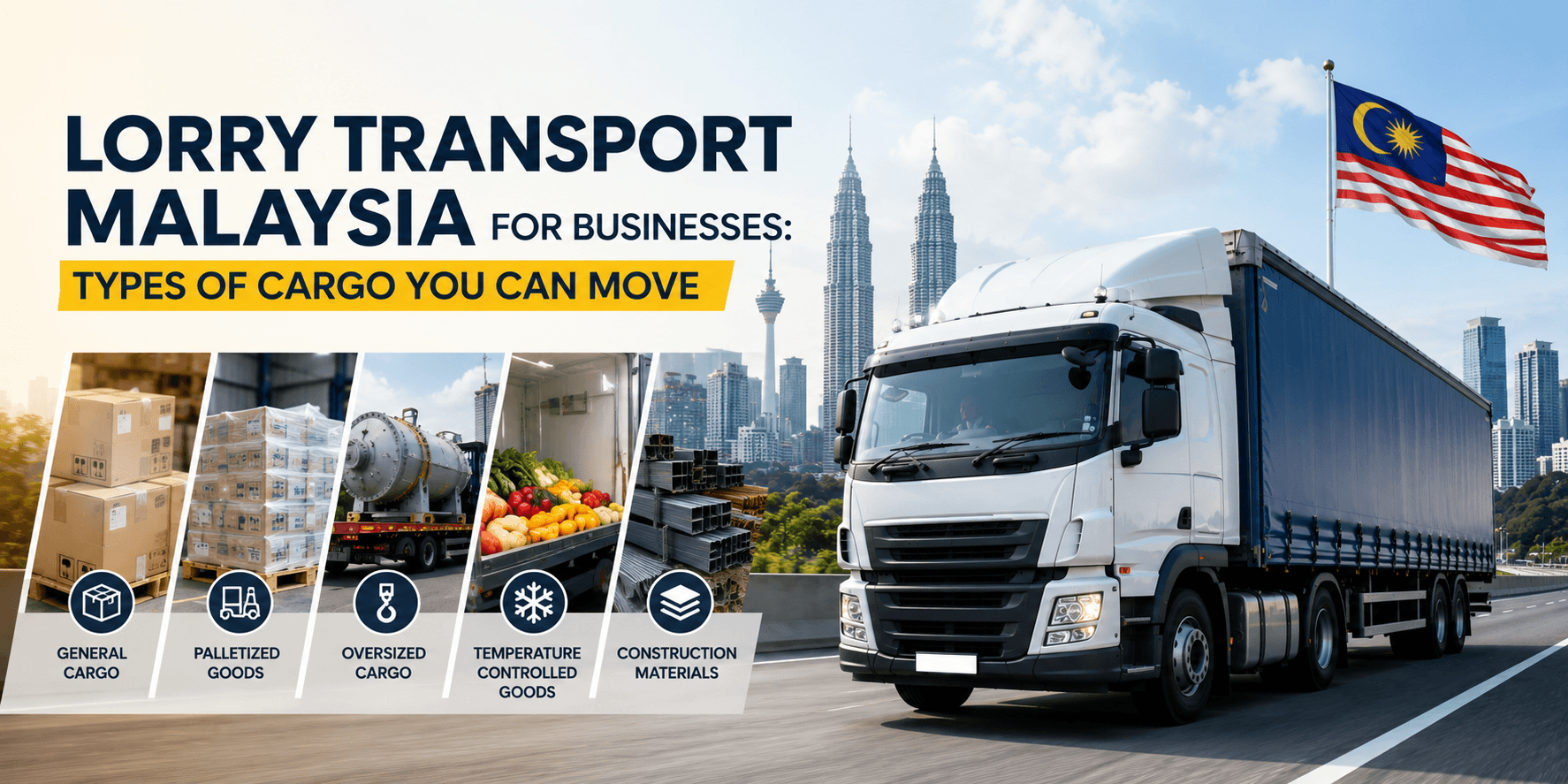
Businesses across Malaysia rely on lorry transport services to move goods between suppliers, warehouses, manufacturing facilities, distribution centres and customer locations. As an essential part of cargo transportation in Malaysia, lorry transport supports the movement of commercial goods across local and inter-state routes while providing businesses with flexibility and direct delivery options.
Malaysia’s manufacturing, retail, distribution and logistics sectors depend heavily on road freight transportation. With major commercial corridors connecting Johor Bahru, Kuala Lumpur, Selangor, Penang and other business centres throughout Peninsular Malaysia, efficient transportation plays a vital role in supporting supply chains and business operations.
From retail inventory and manufacturing materials to industrial equipment and warehouse stock, lorry transport in Malaysia helps businesses maintain operational continuity and ensure goods reach their intended destinations efficiently.
Key Takeaways
- Lorry transport Malaysia services support the movement of commercial cargo across local and inter-state routes.
- Common cargo includes retail inventory, warehouse stock, manufacturing materials, FMCG products, packaging materials and industrial equipment.
- Manufacturing, retail, warehousing, logistics, construction and e-commerce sectors frequently rely on transportation services.
- Businesses may choose between Full Truck Load (FTL) and Less Than Truck Load (LTL) transportation depending on shipment volume and operational requirements.
- Effective transportation planning helps improve inventory management, supply chain continuity and delivery efficiency.
Why Lorry Transport Is Important in Malaysia
Malaysia’s manufacturing, retail, warehousing and distribution sectors rely heavily on road freight transportation to support the movement of goods between suppliers, warehouses, distribution centres and customer locations. With major commercial hubs located in Johor Bahru, Kuala Lumpur, Selangor and Penang, businesses frequently depend on lorry transport services to maintain inventory levels, support production activities and facilitate commercial deliveries throughout Peninsular Malaysia.
The country’s extensive highway network enables efficient cargo movement across local and inter-state routes, making lorry transport in Malaysia one of the most practical solutions for domestic freight transportation.
What Is Lorry Transport?
Lorry transport refers to the movement of goods using commercial freight vehicles between locations. Businesses commonly use lorry transport services in Malaysia to support domestic transportation requirements, warehouse transfers, inventory replenishment and commercial deliveries.
Depending on operational requirements, transport providers may support:
- General cargo transportation
- Retail inventory deliveries
- Warehouse stock transfers
- Manufacturing materials transportation
- Distribution centre deliveries
- Commercial freight transportation
- Scheduled recurring shipments
For many businesses, lorry transport provides a practical and flexible solution for moving goods directly between locations while maintaining greater control over delivery schedules and transportation planning.
What Types of Cargo Can Be Transported by Lorry?
One of the key advantages of lorry transport Malaysia services is the ability to accommodate a wide variety of commercial cargo requirements.
Retail Inventory
Retail businesses frequently transport inventory between warehouses, distribution centres and retail outlets to maintain stock availability and support customer demand.
Examples include:
- Consumer products
- Promotional merchandise
- Seasonal inventory
- Store replenishment stock
Regular transportation helps retailers maintain inventory levels and support ongoing sales activities.
Warehouse Stock
Warehouse operators often arrange transportation to move goods between storage facilities, fulfilment centres and distribution hubs.
Common examples include:
- Inventory transfers
- Distribution stock
- Consolidated shipments
- Fulfilment inventory
These movements help businesses balance inventory levels and improve distribution efficiency.
Manufacturing Materials
Manufacturing operations frequently require transportation for:
- Raw materials
- Production components
- Packaging materials
- Finished goods
Goods may be transported between suppliers, production facilities, warehouses and distribution centres to support ongoing manufacturing activities and production schedules.
Packaging Materials
Packaging materials are essential to many industries, particularly manufacturing, retail and e-commerce businesses.
Commonly transported items include:
- Cartons
- Packaging supplies
- Protective materials
- Product packaging components
Reliable transportation helps ensure operational continuity and inventory availability.
Industrial Equipment and Machinery Parts
Industrial businesses may require transportation for equipment components, machinery parts and operational materials used in production environments.
Examples include:
- Machinery components
- Replacement parts
- Production equipment
- Industrial supplies
Transportation planning for industrial cargo often depends on shipment dimensions, weight and handling requirements.
FMCG Products
Fast-Moving Consumer Goods (FMCG) are among the most frequently transported products in Malaysia.
Examples include:
- Household products
- Consumer goods
- Packaged products
- Distribution inventory
These products often move between manufacturers, distribution centres, wholesalers and retail locations.
Commercial Goods and Business Supplies
Many businesses require transportation for general commercial cargo and operational supplies.
Examples include:
- Office supplies
- Business equipment
- Commercial inventory
- General freight
These shipments support routine business operations across various industries.
How Different Industries Use Lorry Transport
Different industries use freight transportation in Malaysia in different ways depending on their operational requirements.
Manufacturing Industry
Manufacturers often coordinate transportation between suppliers, production facilities, contract manufacturers, warehouses and distribution centres.
Common transportation requirements include:
- Raw material deliveries
- Production component movement
- Finished goods distribution
- Warehouse replenishment
Reliable transportation helps manufacturers maintain production schedules and minimise disruptions within the supply chain.
Retail and Distribution
Retailers, wholesalers and distributors depend on transportation services to move inventory between warehouses, distribution centres and retail outlets.
Transportation supports:
- Inventory replenishment
- Promotional campaigns
- Seasonal stock movement
- Distribution network operations
Regular freight movement helps ensure products remain available throughout the supply chain.
E-Commerce Businesses
Online retailers frequently require transportation support for:
- Inventory replenishment
- Fulfilment operations
- Warehouse transfers
- Distribution activities
Efficient transportation helps support order fulfilment and inventory management processes.
Construction Industry
Construction projects often require transportation for:
- Building materials
- Construction supplies
- Equipment components
- Operational materials
Timely transportation helps ensure project activities remain on schedule and resources are available when needed.
Warehousing and Logistics
Warehouse operators and logistics businesses regularly coordinate cargo movement between facilities to support storage, fulfilment and distribution activities.
Transportation supports:
- Inventory balancing
- Distribution centre transfers
- Fulfilment operations
- Commercial deliveries
Common Transportation Challenges Across Industries
While transportation requirements vary by industry, businesses often face similar logistics challenges when moving goods between locations.
Manufacturing Operations
Manufacturers depend on timely deliveries of raw materials, production components and finished products. Transportation delays may affect production schedules, inventory availability and operational efficiency.
Retail and Distribution Networks
Retailers and distributors frequently replenish inventory across multiple locations. Effective transportation planning helps maintain stock availability and support customer demand.
Warehousing and Logistics Operations
Warehouse operators often coordinate inventory transfers between facilities to support storage capacity, fulfilment requirements and distribution activities.
E-Commerce Fulfilment
Online retailers frequently manage changing order volumes and inventory requirements. Reliable transportation helps support fulfilment operations and inventory movement during peak demand periods.
Understanding these challenges helps businesses plan transportation requirements more effectively and reduce operational disruptions.
Common Business Transportation Scenarios
Businesses use lorry transport services for a variety of operational requirements.
Warehouse to Retail Store Deliveries
Retail inventory is frequently transported from warehouses to stores to replenish stock and support ongoing sales activities.
Factory to Warehouse Transportation
Manufacturers often move finished goods from production facilities to warehouses for storage and distribution.
Warehouse-to-Warehouse Transfers
Businesses may transfer inventory between facilities to optimise storage capacity and support regional distribution requirements.
Distribution Centre Deliveries
Goods are regularly transported from distribution centres to wholesalers, retailers and commercial customers.
Supplier-to-Manufacturer Deliveries
Raw materials and production components are often transported from suppliers to manufacturing facilities to support production activities.
FMCG Distribution Networks
FMCG products commonly move from manufacturers to distribution centres before being delivered to wholesalers, retailers and commercial customers.
E-Commerce Fulfilment Operations
Online retailers frequently transport inventory between warehouses and fulfilment facilities to support customer order processing and distribution.
Transportation Planning Considerations for Businesses
Effective transportation planning can help businesses improve delivery efficiency and minimise operational disruptions.
Delivery Schedule Coordination
Many businesses coordinate deliveries around warehouse receiving hours, production schedules and inventory replenishment cycles. Proper scheduling helps ensure goods arrive when required.
Loading and Unloading Access
Site accessibility can influence transportation planning. Businesses should communicate loading dock availability, access restrictions and unloading requirements before arranging transportation.
Shipment Consolidation Opportunities
Businesses with smaller shipment volumes may benefit from transportation arrangements that optimise available cargo space and improve transportation efficiency.
Recurring Transportation Requirements
Organisations with ongoing inventory movement often benefit from consistent transportation planning to support regular business operations and supply chain continuity.
Providing complete shipment information allows logistics teams to coordinate transportation more effectively and minimise unnecessary delays.
Cargo Handling Considerations
Different cargo categories may require different transportation and handling approaches.
Palletised Goods
Palletised cargo is commonly used for warehouse, retail and distribution shipments because it can improve loading and unloading efficiency while reducing handling time.
High-Volume Inventory
Large inventory movements often require careful transportation planning to ensure shipment capacity aligns with delivery schedules and operational requirements.
Industrial Equipment
Industrial equipment and machinery components may require additional planning based on cargo dimensions, weight and loading requirements.
Packaging Materials
Although often lightweight, packaging materials can occupy significant cargo space and may require transportation planning based on shipment volume.
Mixed Commercial Cargo
Businesses transporting multiple cargo categories within a single shipment may require additional coordination to ensure efficient loading and cargo handling.
Understanding cargo characteristics helps businesses select transportation solutions that align with operational requirements and shipment objectives.
Full Truck Load (FTL) and Less Than Truck Load (LTL) Applications
Businesses often choose transportation arrangements based on cargo volume and shipment requirements.
| Transportation Type | Common Applications | Key Considerations |
| Full Truck Load (FTL) | Large inventory movements, manufacturing shipments, bulk commercial cargo and dedicated transportation requirements | Direct transportation, reduced cargo handling and greater scheduling control |
| Less Than Truck Load (LTL) | Smaller cargo volumes, inventory replenishment, recurring deliveries and partial shipments | Cost-sharing opportunities through consolidated freight arrangements |
Common Cargo Types Suitable for FTL Transportation
FTL transportation is often suitable for:
- Manufacturing materials
- Bulk inventory
- Warehouse stock transfers
- Industrial equipment
- Large commercial shipments
Common Cargo Types Suitable for LTL Transportation
LTL transportation is often suitable for:
- Retail inventory replenishment
- Packaging materials
- Smaller commercial shipments
- Business supplies
- Recurring delivery requirements
The most suitable option depends on shipment size, delivery schedules and operational priorities.
Lorry Transport Support by J&G Global Logistics
J&G Global Logistics supports businesses requiring lorry transport services in Malaysia for commercial cargo movement, inventory transfers and domestic freight transportation requirements.
Whether transporting warehouse stock, manufacturing materials, retail inventory, FMCG products or commercial goods, businesses can benefit from transportation solutions that support efficient cargo movement and operational continuity.
Businesses operating between Johor Bahru, Kuala Lumpur, Selangor, Penang, and other commercial centres throughout Peninsular Malaysia often require transportation support that aligns with their logistics and supply chain requirements.
Need a Reliable Lorry Transport Solution in Malaysia?
Whether transporting retail inventory, manufacturing materials, warehouse stock, FMCG products or commercial goods, selecting the right transportation solution can help improve operational efficiency and support business continuity.
J&G Global Logistics supports businesses requiring domestic freight transportation and commercial cargo movement throughout Malaysia.
Discuss Your Transportation Requirements
Businesses planning one-time shipments or recurring transportation needs can contact the J&G Global Logistics team to explore suitable transportation options based on cargo type, shipment volume and operational requirements.
Frequently Asked Questions
Lorry transport refers to the movement of goods using commercial freight vehicles between locations for business, industrial and commercial purposes.
Common cargo includes retail inventory, warehouse stock, manufacturing materials, packaging supplies, industrial equipment, machinery parts, FMCG products and general commercial goods.
Manufacturing, retail, distribution, warehousing, logistics, e-commerce and construction industries frequently rely on transportation services to support daily operations.
Yes. Many businesses use transportation services to move inventory between warehouses, fulfilment centres and distribution facilities.
FTL transportation is commonly used for larger shipments that require dedicated vehicle capacity and direct transportation between locations.
LTL transportation is commonly used for smaller shipments that do not require an entire vehicle and can be consolidated with other freight.
Transportation planning may depend on cargo dimensions, shipment volume, handling requirements, pickup locations and delivery schedules.
Yes. Many businesses schedule recurring transportation services to support inventory replenishment, distribution activities and ongoing supply chain requirements.